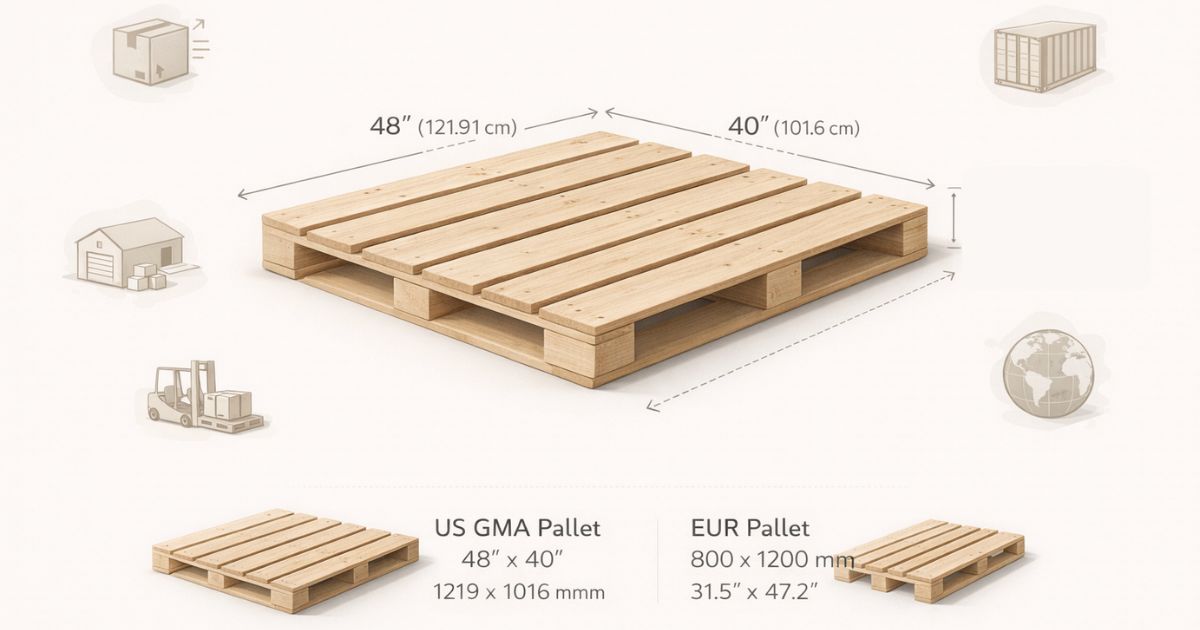
The standard pallet size in the United States is 48 inches by 40 inches by 6 inches (121.9 x 101.6 x 15.2 cm).
This guide breaks down everything you need to know about standard pallet measurements, from the 48×40 GMA pallet that dominates US logistics to international dimensions and specialty sizes.
What Are Standard Pallet Dimensions ?
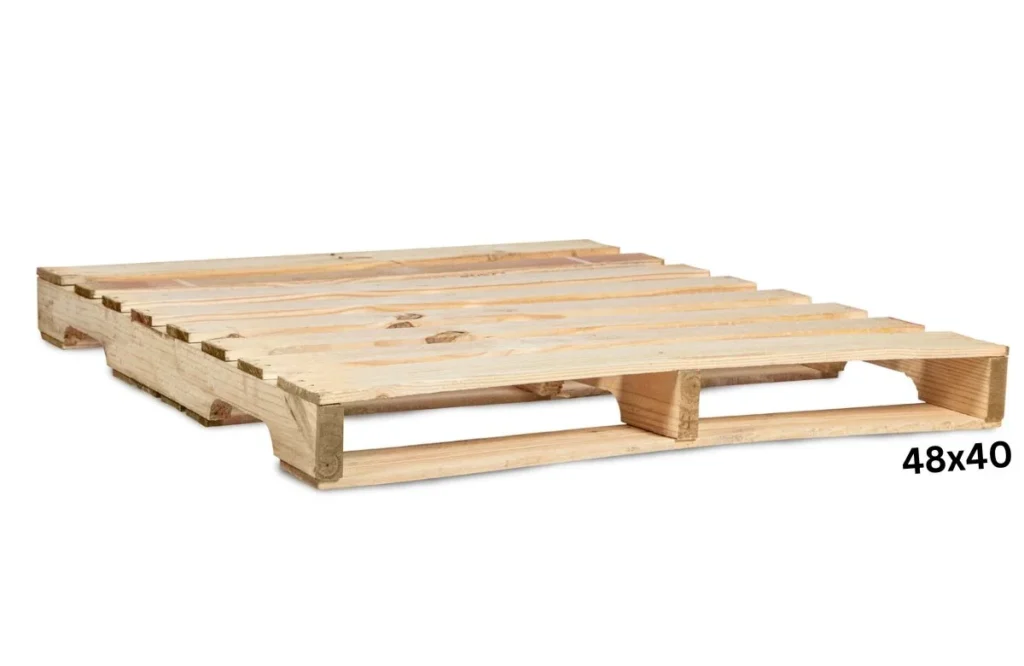
The 48×40 GMA Pallet
The 48×40 pallet is the most common size in North America, representing over 30% of all pallets used in the United States. This standard pallet size measures 48 inches in length, 40 inches in width, and 6 inches in height.
Standard 48×40 pallet specifications include deck boards that are 3.5 inches wide and 5/16 inches thick. The GMA pallet (Grocery Manufacturers Association) weighs between 37-48 pounds and can safely hold up to 4,600 pounds of evenly distributed weight.
Common US Pallet Sizes by Industry
Different industries use specific pallet measurements optimized for their products. The automotive industry relies on 48×45 pallets, while dairy operations prefer the 40×40 square pallet for stability.
Beverage companies commonly use 36×36 pallets for efficient stacking, and retail stores favor 48×20 pallets that fit easily through narrow aisles. The chemical industry uses 48×42 dimensions, and drum storage requires the larger 48×48 pallet size.
| Pallet Dimensions (inches) | Primary Industries | Load Capacity |
|---|---|---|
| 📦 48 × 40 | Grocery, General Retail | 4,600 lbs |
| 🥛 40 × 40 | Dairy Products | 3,544 lbs |
| 🍺 36 × 36 | Beverage Distribution | 3,544 lbs |
| 🚗 48 × 45 | Automotive Parts | 5,500 lbs |
| 🛢️ 48 × 48 | Chemical Drums | 4,673 lbs |
| 🛍️ 48 × 20 | Retail Stores | 2,800 lbs |
Standard Pallet Measurements
Pallet Dimensions in Inches and Centimeters
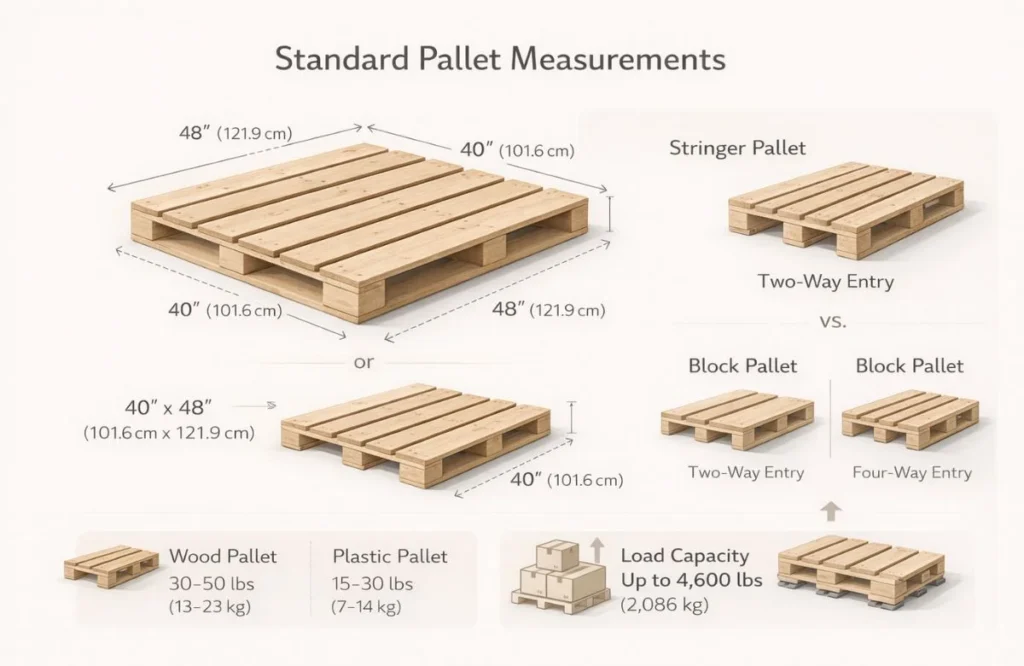
Converting pallet dimensions from inches to centimeters helps with international shipping. The standard 48×40 pallet in CM measures 121.9 x 101.6 x 15.2 centimeters (length x width x height).
A 40×48 pallet flips these measurements to 101.6 x 121.9 centimeters. This reversed pallet dimension accommodates different loading patterns while maintaining the same footprint.
Standard pallet weight varies by material. Wood pallets range from 30-48 pounds, while plastic pallets weigh 13-32 pounds. Load capacity depends on construction—standard wood pallets hold 2,500 pounds, but heavy-duty plastic versions support up to 17,600 pounds.
Stringer vs. Block Pallets
Stringer pallets use three parallel boards (stringers) running the length of the pallet. These two-way pallets allow forklift entry from two opposite sides only, measuring 48 inches along the stringer length.
Block pallets feature blocks between top and bottom deck boards, creating four-way entry from all sides. This design distributes weight more evenly and typically adds 2-3 pounds to the pallet weight.
International Pallet Dimensions & Global Standards
European Pallet Size (EUR/EPAL Standards)
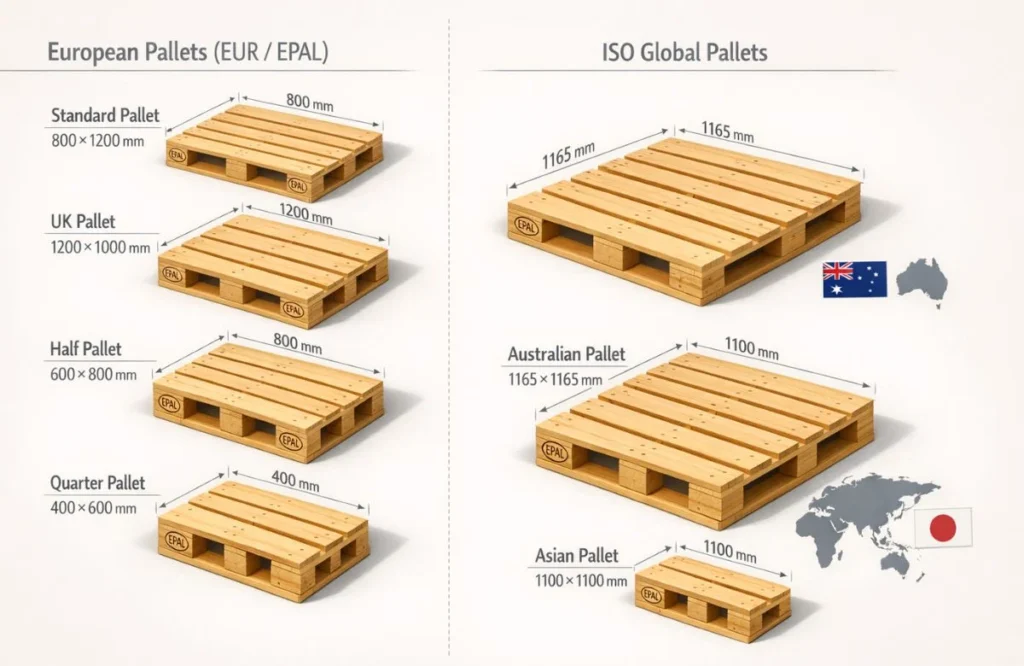
The European pallet (EUR pallet) measures 800 x 1200 mm, which converts to 31.5 x 47.24 inches. The European Pallet Association (EPAL) strictly regulates these dimensions to ensure consistent quality across Europe.
EUR 1 pallets represent 21% of European pallet production and must display official EPAL stamps. EUR 2 pallets measure 1200 x 1000 mm (47.24 x 39.37 inches) and serve as the standard UK pallet size.
Half pallets (EUR 6) measure 600 x 800 mm, exactly half the standard European pallet dimensions. Quarter pallets at 400 x 600 mm work perfectly for smaller shipments and retail displays.
ISO Pallet Dimensions Worldwide
The International Organization for Standardization recognizes six standard pallet sizes globally. These ISO pallet dimensions facilitate international trade by standardizing measurements across borders.
Australian standard pallets measure 1165 x 1165 mm (45.9 x 45.9 inches) square, designed to fit Australian railway containers. Asian pallet standards use 1100 x 1100 mm (43.3 x 43.3 inches), popular in Japan, China, and India.
| ISO Pallet Size | Dimensions (mm) | Dimensions (inches) | Primary Region |
|---|---|---|---|
| 🇺🇸 ISO 1 | 1016 × 1219 | 40 × 48 | North America |
| 🇪🇺 ISO 2 | 1000 × 1200 | 39.37 × 47.24 | Europe, Asia |
| 🌍 ISO 3 | 1067 × 1067 | 42 × 42 | North America, Europe |
| 🇯🇵 ISO 4 | 1100 × 1100 | 43.3 × 43.3 | Asia |
| 🇪🇺 ISO 5 | 800 × 1200 | 31.5 × 47.24 | Europe |
| 🇦🇺 ISO 6 | 1165 × 1165 | 45.9 × 45.9 | Australia |
Types of Pallets and Their Standard Measurements
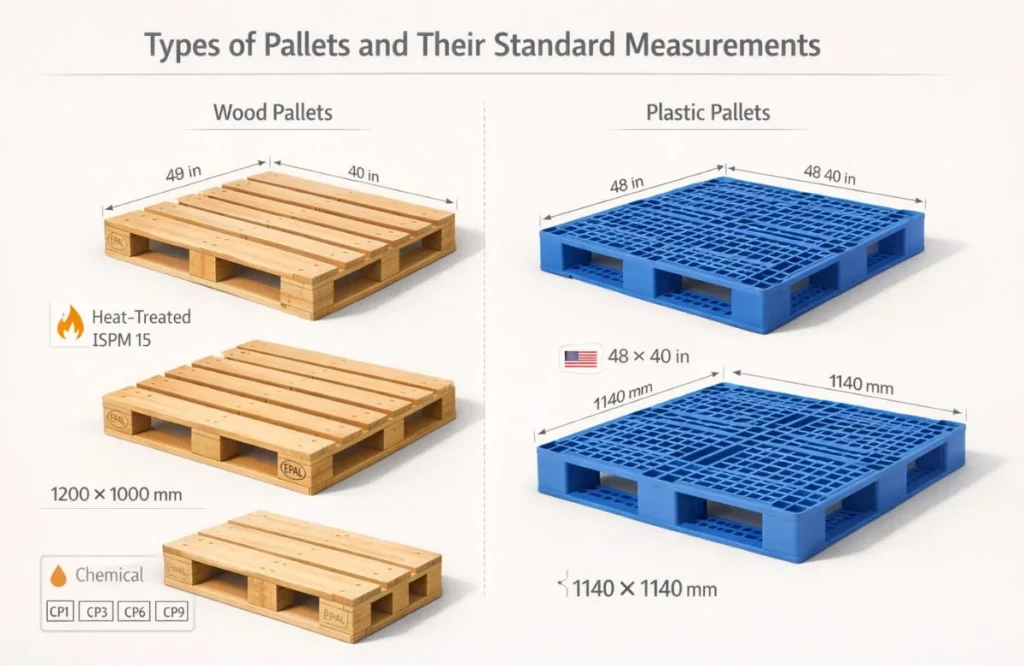
Wood Pallets vs. Plastic Pallets
Wood pallet dimensions follow the same size standards as plastic, but construction methods create slight variations. New wood pallets maintain precise measurements, while recycled pallets may vary by 1-2 inches due to wear.
Plastic pallet sizes offer more consistency since they’re injection-molded to exact specifications. Industrial plastic pallets measure 48 x 40 x 5 inches and weigh 25-30 pounds.
Heat-treated pallets (HT) meeting ISPM 15 standards maintain standard measurements after treatment. This fumigation process prevents pest transmission in international shipping without altering pallet dimensions.
Specialty Pallet Dimensions
Chemical industry pallets follow CP pallet specifications created by PlasticsEurope. CP1 pallets measure 1200 x 1000 mm for boxes and bags. CP3 pallets use 1140 x 1140 mm square dimensions for drums and octabins.
CP6 pallets match standard 48×40 dimensions but include bottom deck boards for stacking. CP9 pallets at 1140 x 1140 mm feature reinforced corners for bulk containers.
Other Post: Standard Pillow Dimensions & Measurements
Question’s
What is the standard size of pallets?
The standard pallet size in the United States is 48 inches by 40 inches by 6 inches (121.9 x 101.6 x 15.2 cm). This GMA pallet accounts for approximately 30% of all pallets used in North America.
What size is a 40×48 pallet in CM?
A 40×48 pallet measures 101.6 cm wide by 121.9 cm long by 15.2 cm high. This reversed dimension provides the same footprint as a 48×40 pallet but changes forklift entry orientation.
How big is a European pallet?
The standard European pallet (EUR 1) measures 800 x 1200 mm or 31.5 x 47.24 inches. The EPAL (European Pallet Association) regulates these dimensions across Europe.
What is the size of a pallet in CM?
Standard pallet dimensions in CM are 121.9 x 101.6 x 15.2 centimeters for US pallets and 120 x 80 x 14.5 centimeters for European pallets. Measurements represent length x width x height.
What is a full pallet size?
A full pallet refers to both the base dimensions and maximum loading height. The base is typically 48×40 inches, with a maximum safe loading height of 48 inches, creating total dimensions of 48 x 40 x 54 inches including the pallet height.
Why are pallets called skids?
Pallets and skids differ structurally—skids have only a top deck board with no bottom deck. The terms became interchangeable over time, though technically a skid lacks the full bottom support structure of a true pallet.
What are the three types of pallets?
The three main pallet types are stringer pallets (parallel boards supporting the deck), block pallets (blocks between decks allowing four-way entry), and skid pallets (single-deck platforms). Each type comes in standard dimensions but offers different handling capabilities.
How much is a standard size pallet?
New wood pallets cost $10-25 each, recycled pallets run $5-15, and plastic pallets range from $50-150. Heat-treated pallets add $3-8 per unit. Prices vary by region, material, and quantity ordered.
Are pallet sizes standardized globally?
Pallet standardization varies by region rather than globally. The ISO recognizes six standard sizes, but North America primarily uses 48×40 inches, Europe favors 800 x 1200 mm, and Asia commonly uses 1100 x 1100 mm.
Conclusion
Understanding standard pallet dimensions helps you optimize shipping costs, warehouse space, and supply chain efficiency. The 48×40 GMA pallet dominates US markets, while European pallets at 800 x 1200 mm serve international trade.

Fitness guru and lead author, crafting every post with passion. Certified trainer dedicated to your online fitness journey—empowering steps toward a healthier you!