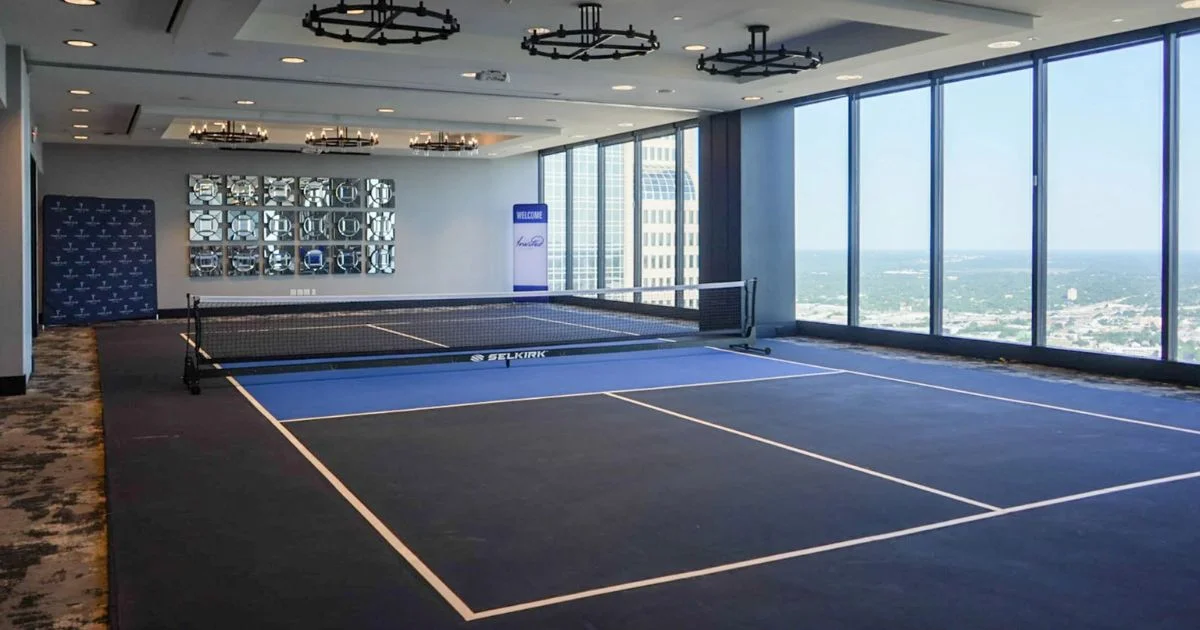
The playing surface measures exactly 20 feet wide by 44 feet long. Total recommended space including buffer zones is 30 feet by 60 feet for safe play.
This guide breaks down every measurement, zone, and specification you need.
Official Pickleball Court Dimensions and Layout
Standard Pickleball Court Size
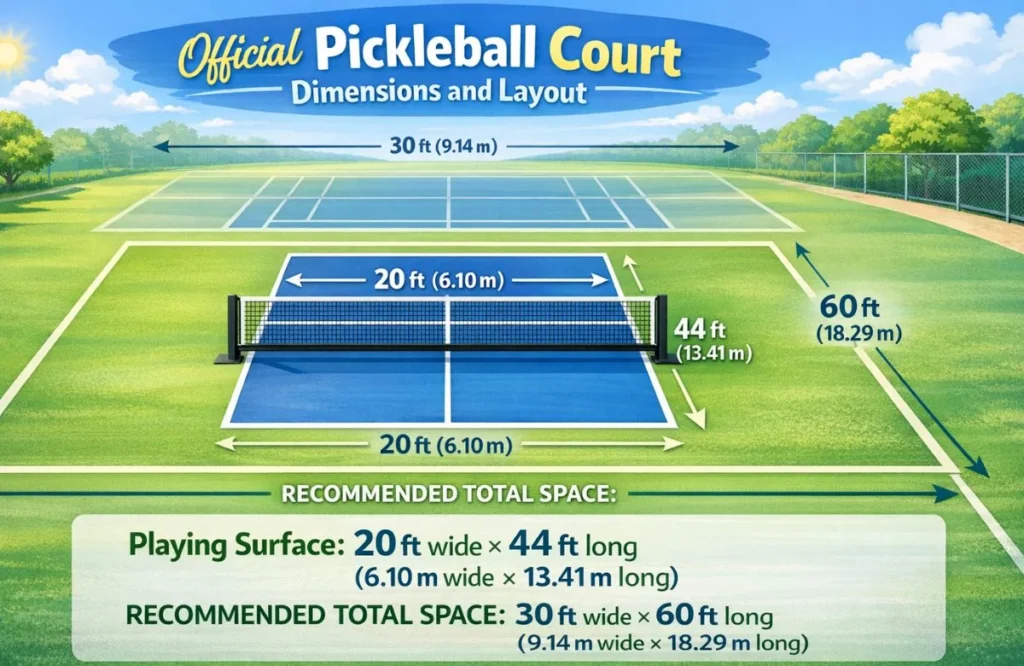
The playing surface measures 20 feet wide by 44 feet long. This applies to both singles and doubles play, making pickleball unique among racket sports.
For proper gameplay, you need total space of 30 feet by 60 feet. This includes the mandatory out-of-bounds buffer zone that prevents collisions and allows safe ball retrieval.
Pickleball courts are significantly smaller than tennis courts. A tennis court spans 78 feet long and 36 feet wide for doubles. That’s why multiple pickleball courts fit easily on one tennis court.
In metric measurements, the playing area converts to 6.10 meters wide by 13.41 meters long. The recommended total space becomes 9.14 meters by 18.29 meters.
More Posts: How Big Is a Football Field? Official Football Field Dimensions (2026)
Breaking Down the Court Zones and Lines
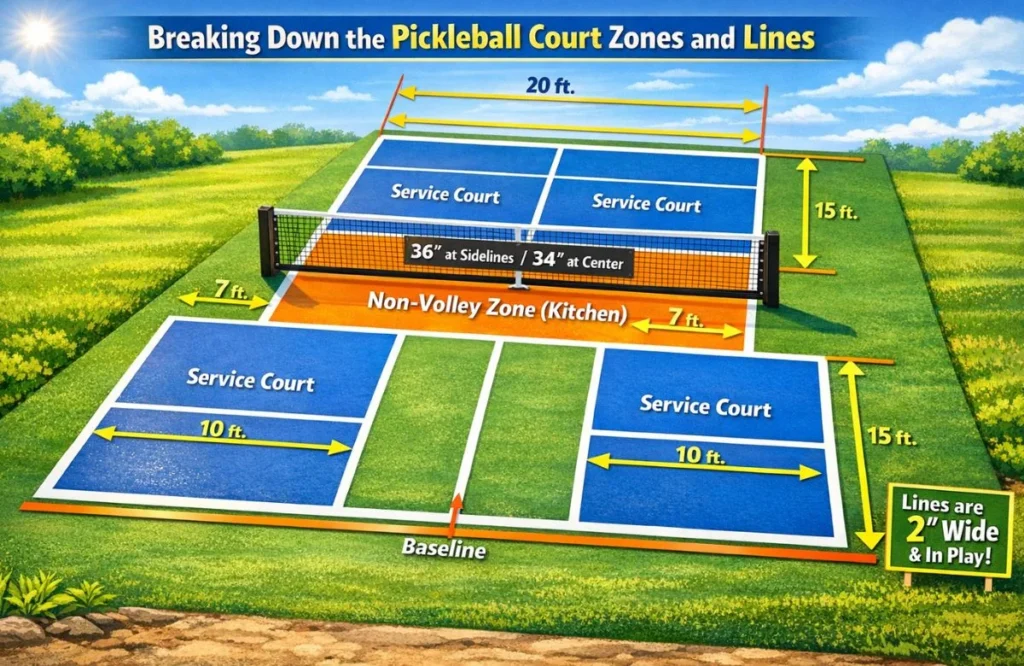
The Non-Volley Zone, commonly called the kitchen, extends 7 feet from the net on both sides. This zone runs the full 20-foot width of the court and defines pickleball’s most crucial rule.
Each side has two service courts measuring 15 feet deep by 10 feet wide. The centerline divides these courts, running from the kitchen line to the baseline.
All court lines must be 2 inches wide according to USA Pickleball regulations. Lines are considered part of the court, meaning balls landing on lines are in play.
The net height sits at 36 inches at the sidelines and dips to 34 inches at center. This slight sag accommodates net tension and follows official tournament standards.
More Posts: Standard Tub Dimensions & Measurements Guide 2026
Pickleball Court Surface Materials and Specifications
Acrylic surfaces dominate USA pickleball courts for good reason. They provide consistent ball bounce, excellent traction, and weather resistance that lasts years.
Cushioned acrylic systems add shock absorption, reducing joint stress during long play sessions. These surfaces cost more upfront but deliver superior comfort, especially for older players.
Concrete bases outperform asphalt for pickleball court construction. Concrete provides better stability, fewer cracks, and longer lifespan. Post-tensioned concrete eliminates expansion joints that can disrupt ball bounce.
Court colors typically feature green or blue playing surfaces with contrasting line colors. Dark green backgrounds reduce glare in outdoor settings while improving ball visibility across all skill levels.
More Post: Tennis Court Dimensions & Measurements Guide 2026
Converting Tennis Courts to Pickleball
Four regulation pickleball courts fit on one standard tennis court with proper layout. This conversion maximizes existing space and serves growing player demand.
Tennis courts measure 78 feet by 36 feet for doubles play. The length difference means pickleball courts can run perpendicular to tennis court orientation for better space utilization.
Temporary line tape offers the easiest conversion method. This removable solution lets tennis and pickleball players share the same space without permanent changes.
Permanent dual striping uses different colors for each sport. Tennis lines typically stay white while pickleball lines use colors like yellow or orange to minimize confusion during play.
Portable net systems let you adjust height from tennis (42 inches center) to pickleball (34 inches center) in seconds. Quality systems cost $200-$500 and install without ground anchors.
More Post: Pokemon Card Dimensions & Measurements
Question’s
What are the dimensions of a pickleball court?
The playing surface measures exactly 20 feet wide by 44 feet long. Total recommended space including buffer zones is 30 feet by 60 feet for safe play.
Is a pickleball 26 hole or 40 hole?
Outdoor pickleballs have 40 holes while indoor balls have 26 holes. This question relates to ball specifications, not court dimensions. The hole count affects wind resistance and ball speed.
Is a pickleball court the same size as a tennis ball court?
No, pickleball courts are much smaller at 20×44 feet compared to tennis courts at 78×36 feet. Tennis courts are nearly four times larger, which is why multiple pickleball courts fit on one tennis court.
What is the 10 second rule in pickleball?
Servers must complete their serve within 10 seconds after the referee or scorer calls the score. This rule prevents delays and maintains game pace during competitive play.
What is the golden rule pickleball?
The golden rule emphasizes sportsmanship, respect, and fun above competition. Players should make fair line calls, respect opponents, and prioritize the sport’s welcoming community atmosphere.
What are 5 things you cannot do in pickleball?
You cannot volley in the kitchen, skip the double-bounce rule, serve overhand, touch the net during play, or carry the ball on your paddle. These violations result in faults.
Can I convert a tennis court to pickleball?
Yes, tennis courts convert easily to pickleball with up to 4 regulation courts fitting on one tennis court. Options range from temporary tape lines to permanent dual striping.
Is pickleball a good workout?
Pickleball burns 250-350 calories per hour and provides excellent cardio exercise with lower impact than tennis or basketball. The sport suits all fitness levels and ages.
What type of surface is best for pickleball?
Cushioned acrylic on a concrete base delivers optimal performance for outdoor courts. This combination provides consistent bounce, good traction, and joint-friendly shock absorption that lasts 8-10 years.
Conclusion
Pickleball court dimensions of 20 feet by 44 feet create the perfect balance of strategy and athleticism. Whether building from scratch or converting existing space, accurate measurements ensure quality play.

Fitness guru and lead author, crafting every post with passion. Certified trainer dedicated to your online fitness journey—empowering steps toward a healthier you!