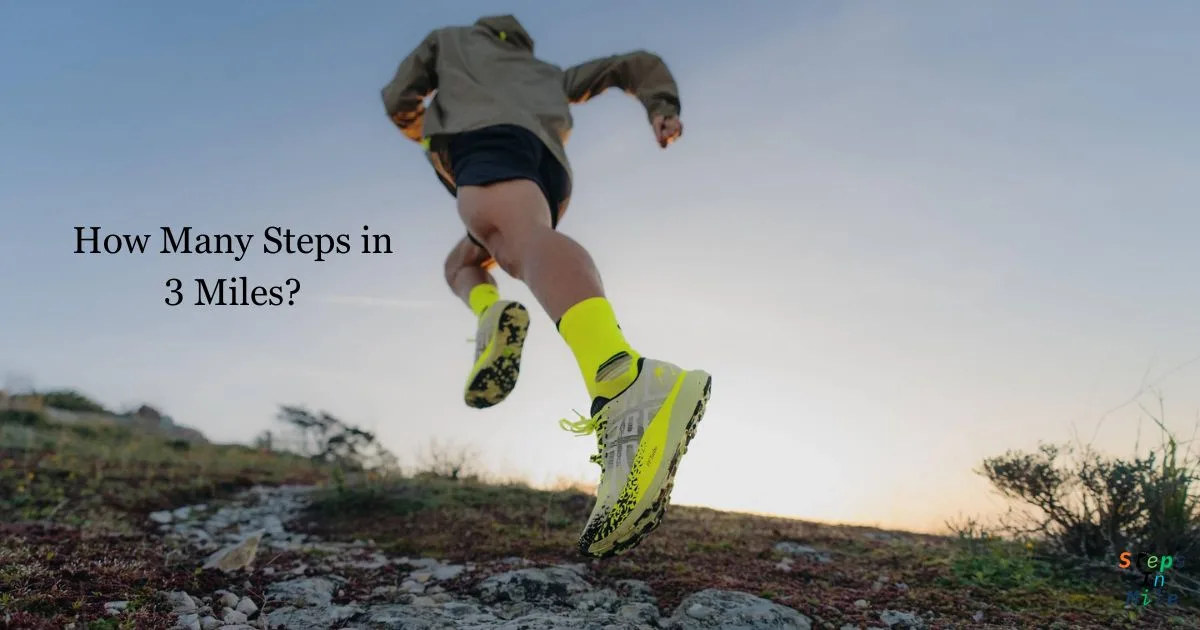
How many steps in 3 miles? Walking takes about 6,500–6,900 steps, while running needs around 4,500–5,000 steps.
Your exact step count changes based on stride length, pace, height, and gender differences.
Faster speed and longer strides reduce steps per mile, while slower walking increases the total count.
.
Your step count for 3 miles varies based on several factors including your height, gender, pace, and whether you’re walking or running.
On average, you’ll take between 4,500 to 7,200 steps to cover this distance. Let’s break down exactly what you can expect.
Quick Answer
The average person takes approximately 6,700 steps to walk 3 miles at a moderate pace. If you’re running the same distance, expect around 4,500 steps instead.
Why the difference? When you run, your stride length increases significantly. This means each step covers more ground, reducing your total step count. Men typically take fewer steps than women due to naturally longer stride lengths.
Here’s a quick reference:
| Activity | Men Steps | Women Steps |
| Walking 3 Miles | 6,500 steps | 6,900 steps |
| Running 3 Miles | 4,600 steps | 4,900 steps |
Your personal step count may differ based on your individual characteristics. Height, fitness level, and walking speed all play crucial roles in determining your exact numbers.
How Many Steps in 3 Miles Walking?

Walking 3 miles requires between 6,500 to 6,900 steps for most adults. Men average around 6,500 steps while women take closer to 6,900 steps for the same distance.
The calculation is straightforward. One mile equals 5,280 feet. For 3 miles, that’s 15,840 feet total. Men have an average stride length of 2.5 feet, while women average 2.2 feet per stride.
Here’s the math:
- Men: 15,840 feet ÷ 2.5 feet = 6,336 steps
- Women: 15,840 feet ÷ 2.2 feet = 7,200 steps
Your walking pace dramatically affects your step count. A slower pace means shorter strides and more steps. A brisk walk increases stride length, reducing total steps.
| Walking Pace | Men Steps | Women Steps | Time Required |
| Slow Walk (2 mph) | 8,400 | 8,800 | 90 minutes |
| Average Walk (3 mph) | 6,500 | 6,900 | 60 minutes |
| Brisk Walk (4 mph) | 5,550 | 6,000 | 45 minutes |
According to research from the NIH, taking fewer than 4,000 steps daily classifies you as inactive. A single 3-mile walk gets you well past this threshold.
How Many Steps in 3 Miles Running?

Running 3 miles takes approximately 4,500 to 5,000 steps on average. This is significantly fewer than walking the same distance.
Why do runners take fewer steps? Your stride length extends dramatically when running. At a 6 mph running pace, men cover about 3.4 feet per step compared to 2.5 feet while walking.
| Running Pace | Men Steps | Women Steps | Time Required |
| Jog (5 mph) | 5,200 | 5,800 | 36 minutes |
| Run (6 mph) | 4,640 | 4,960 | 30 minutes |
| Fast Run (7.5 mph) | 3,780 | 4,100 | 24 minutes |
| Very Fast Run (10 mph) | 2,920 | 3,240 | 18 minutes |
The faster you run, the fewer steps you need. Elite runners can cover 3 miles in under 3,000 steps thanks to their powerful, efficient strides.
According to studies on running biomechanics, competitive runners take fewer than 1,000 steps per mile. Recreational runners typically range from 1,200 to 1,800 steps per mile depending on their experience level.
What Factors Affect Steps in 3 Miles?

Height and Stride Length
Taller individuals take fewer steps to cover 3 miles. Your height directly determines your natural stride length, which is the distance covered in each step.
The formula is simple: stride length equals approximately 0.413 times your height (in inches) for women and 0.415 for men. A 6-foot tall man has a stride length around 29.9 inches, while a 5-foot woman’s stride measures about 24.8 inches.
| Height | Men Steps (3 Miles) | Women Steps (3 Miles) |
| 5’0″ | 7,634 | 7,671 |
| 5’6″ | 6,940 | 6,973 |
| 6’0″ | 6,361 | 6,392 |
| 6’6″ | 5,872 | 5,901 |
Gender Differences
Men typically take 400-800 fewer steps than women when walking 3 miles. This difference stems from anatomical variations in leg length and pelvic structure.
Women’s shorter average stride length means more steps to cover the same distance. However, research shows that women maintain more consistent cadence (steps per minute) across different walking speeds.
Speed and Pace
Your movement speed is the single biggest factor affecting step count. Walking at 2 mph requires nearly 50% more steps than walking at 4 mph.
Faster speeds naturally lengthen your stride. When you increase pace, your body compensates by pushing off harder and covering more ground per step. This biomechanical efficiency reduces total step count.
Fitness Level and Experience
Experienced walkers and runners develop more efficient movement patterns. Beginners often take shorter, choppy steps while seasoned athletes maximize each stride.
Better conditioning allows for longer strides without increased effort. As your cardiovascular fitness improves, so does your ability to maintain optimal stride length throughout your entire 3-mile journey.
Terrain and Weather Conditions
Uneven surfaces force you to take more steps. Trail running or walking on hills requires careful foot placement, naturally shortening your stride.
Temperature and humidity impact performance too. Studies indicate that heat causes earlier fatigue, which reduces stride length. Wind resistance, especially headwinds, also affects your natural gait pattern.
How to Track Your Steps for 3 Miles
Modern fitness trackers make monitoring steps incredibly easy. Devices like Fitbit, Apple Watch, and Garmin automatically count every step you take throughout the day.
Smartphone apps offer a free alternative to dedicated fitness trackers. Most phones have built-in accelerometers that accurately measure steps. Popular options include Apple Health, Google Fit, and Samsung Health.
Traditional pedometers still work perfectly for basic step counting. These simple clip-on devices cost less than $20 and provide accurate counts without requiring charging or smartphone connections.
FAQ’s
Is walking 3 miles a day good exercise?
Yes, walking 3 miles daily is excellent exercise for most people. This equals roughly 6,500-7,000 steps and takes 45-60 minutes at a moderate pace. According to the CDC guidelines, this meets the recommended 150 minutes of moderate activity per week. Regular 3-mile walks improve cardiovascular health, strengthen bones, and help maintain healthy body weight.
How many steps are in a 3 mile run?
A 3-mile run contains approximately 4,500-5,000 steps for average runners. The exact count depends on your running pace and stride length. Faster runners take fewer steps because their stride extends further. Men average around 4,640 steps while women take about 4,960 steps at a 6 mph pace.
How many steps are in 60 minutes of walking?
Most people take 6,000-7,000 steps in 60 minutes of walking at a moderate 3 mph pace. This equals roughly 3 miles of distance. Slower walkers (2 mph) cover about 4,000-5,000 steps, while brisk walkers (4 mph) may reach 8,000-9,000 steps in the same timeframe.
Can I walk 5000 steps in 30 minutes?
Yes, walking 5,000 steps in 30 minutes is possible but requires a brisk pace of approximately 4 mph. This equals about 2.5 miles in half an hour. Most people need to walk purposefully at this speed, though experienced walkers find it comfortable. Beginners typically walk 3,000-4,000 steps in 30 minutes at more moderate paces.
Is it better to walk faster or longer?
Both approaches offer unique benefits. Walking longer at moderate pace (3 mph) builds endurance and burns more total calories. Walking faster (4+ mph) provides better cardiovascular conditioning and saves time. Research suggests that total daily step count matters more than intensity for general health. Choose based on your fitness goals and schedule constraints.
Conclusion
Understanding how many steps in 3 miles helps you set realistic fitness goals and track progress effectively. Walking takes 6,500-6,900 steps while running requires only 4,500-5,000 steps for most people.
Your personal step count varies based on height, gender, pace, and terrain. Use this knowledge to plan workouts that match your fitness level and available time. Start tracking today to see exactly how your body performs over 3 miles.

Fitness guru and lead author, crafting every post with passion. Certified trainer dedicated to your online fitness journey—empowering steps toward a healthier you!