The standard bathtub measures 60 inches long, 30-32 inches wide, and 14-16 inches deep.
This alcove-style tub fits most American bathrooms and holds 40-60 gallons of water.
Standard Bathtub Sizes in the United States
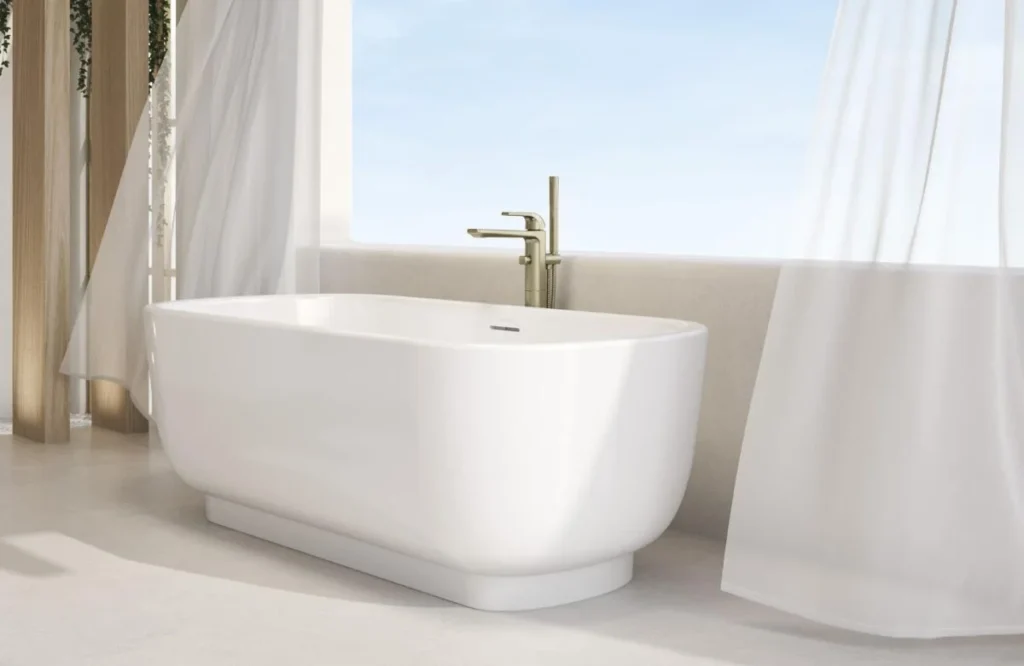
What Size is a Standard Bathtub?
The most common standard bathtub size in the United States measures 60 inches long, 30 to 32 inches wide, and 14 to 16 inches deep.
Alcove tubs dominate American bathrooms because they maximize space efficiency. These tubs nestle between three walls and typically hold 40 to 60 gallons of water when filled.
Smaller options exist for compact bathrooms. 54-inch tubs offer a space-saving alternative, though they sacrifice some legroom. Larger homes often feature 66 to 72-inch tubs for extra comfort during long soaks.
Standard Bathtub Dimensions by Type
Alcove bathtubs remain the most popular choice. The standard 60″ x 30″ x 14-16″ fits tight spaces perfectly. Compact models measure 54″ x 30″, while wider versions reach 60″ x 32″ for added shoulder room.
Freestanding bathtubs range from 60 to 70 inches long and 28 to 32 inches wide. Their height typically spans 20 to 26 inches since they sit directly on the floor. These statement pieces need clearance on all sides for visual impact.
Corner bathtubs typically measure 60″ x 60″ for standard installations. Smaller bathrooms can accommodate 48″ x 48″ models. These triangular tubs save space while offering generous soaking depth.
Soaking tubs prioritize depth over width. Expect 60 to 72 inches in length, 32 inches wide, and 20 to 24 inches deep for full-body immersion. Japanese-style soaking tubs may be shorter but significantly deeper.
Walk-in bathtubs designed for accessibility measure approximately 52 inches long, 28 to 32 inches wide, and 38 to 40 inches high. The door and built-in seat make entry easier for seniors and those with mobility challenges.
Standard Bathtub Measurements
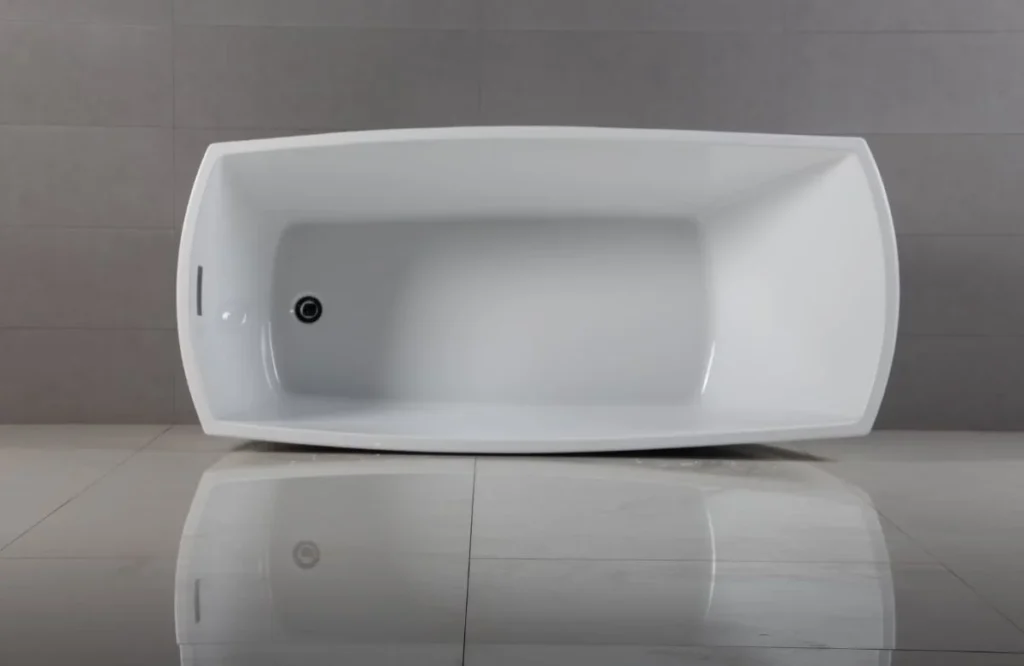
What is the Size of a Bathtub in CM?
Converting bathtub dimensions to metric helps when ordering imported tubs or comparing international products. The standard 60-inch American tub equals 152.4 centimeters or 1,524 millimeters.
Common conversions include 30 inches = 76.2 cm (762mm) and 32 inches = 81.3 cm (813mm). European manufacturers often use slightly different sizing standards, so always verify measurements before purchasing.
Common Metric Bathtub Sizes Explained
Are all baths 700mm wide? No, but 700mm (27.5 inches) represents a common compact width in European markets. Standard widths range from 700mm to 800mm (31.5 inches) depending on the model.
Is a 1600mm bath too small? A 1600mm bathtub measures approximately 63 inches long. This works fine for most adults under 5’10”, though taller individuals might feel cramped. It’s considered a mid-size option between compact and standard.
Is a 1500 bath too small for a woman? A 1500mm tub (59 inches) falls slightly below American standards. Most women will fit comfortably, but limited legroom may reduce relaxation during extended soaks. Body height matters more than gender.
Is a 1700mm bathtub big? At roughly 67 inches long, a 1700mm tub qualifies as generously sized. This length accommodates most people up to 6’2″ with room to stretch. It’s larger than standard but smaller than luxury models.
Choosing the Right Bathtub Depth and Water Capacity
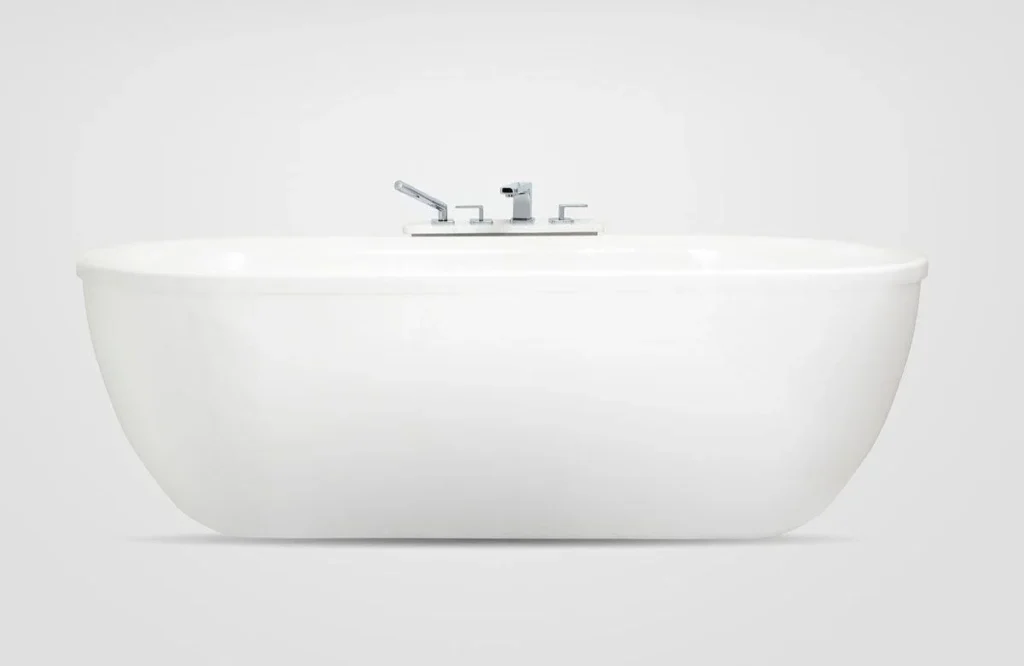
What is a Good Depth for a Bathtub?
Standard bathtub depth measures 14 to 16 inches from the bottom to the overflow drain. This depth allows adequate water coverage for most bathers while preventing dangerous water levels and conserving hot water.
Soaking tub depth ranges from 18 to 24+ inches for those who want full-body immersion. Deeper tubs require more water and stronger floor support. The overflow drain placement determines actual usable depth, typically positioned 2-4 inches below the rim.
Consider your physical comfort when selecting depth. Deeper tubs require higher sides to climb over, which can challenge seniors or those with joint issues. Shallower tubs offer easier entry but less water coverage.
More Post: Soccer Pitch Dimensions
Bathtub Water Capacity and Fill Volume
A standard 60-inch alcove tub holds 40 to 60 gallons when filled to the overflow drain. Actual capacity depends on the bather’s body displacement, typically reducing usable water by 10-15 gallons.
Soaking tubs consume 60 to 100+ gallons per fill. Your water heater capacity becomes critical here—most 50-gallon heaters struggle to fill large tubs with comfortably hot water. Consider upgrading to a 75-gallon or tankless system for oversized tubs.
Water efficiency matters both environmentally and financially. A standard 5-minute shower uses about 10-25 gallons, while filling a large soaking tub can triple that amount. Factor ongoing utility costs into your decision.
Bathroom Space Requirements for Standard Bathtubs
Alcove Tub Requirements
Wall length: 60″ standard (54″ compact)
Width: 30–32″
No extra side clearance needed (walls enclose 3 sides)
Freestanding Tub Clearance
Side clearance: 6–12″ on all exposed sides
60″ tub → 72–84″ total floor space needed
For cleaning access & visual balance
Building Code Minimums
In front of tub: 21″ clear space
Toilet: 15″ from centerline
Vanity: 30″ wide minimum
Small Bathroom (5′ × 8′ / 40 sq ft)
Best: 54″ or 60″ alcove tubs
Maximizes bathing area
Corner tubs possible with careful planning
Medium Bathroom (7′ × 9′ / 63 sq ft)
Ideal: 60″ alcove or small freestanding
Flexible for tub/shower combos
Large Bathroom (10′ × 10’+ / 100+ sq ft)
Options: 66–72″ freestanding, luxury soaking, or corner tubs
Room for separate shower
More Post: Standard Door Dimensions & Measurements
Question’s
What size is a standard bathtub?
The standard bathtub measures 60 inches long, 30-32 inches wide, and 14-16 inches deep. This alcove-style tub fits most American bathrooms and holds 40-60 gallons of water.
What is the size of a bathtub in CM?
A standard 60-inch bathtub equals 152.4 cm (1,524mm) in length. The typical 30-inch width converts to 76.2 cm (762mm). Standard depth of 14-16 inches equals 35.6-40.6 cm.
Are all baths 700mm wide?
No, 700mm (27.5 inches) represents a compact European width. Standard widths range from 700mm to 800mm (31.5 inches). American standard tubs typically measure 762mm (30 inches) or 813mm (32 inches) wide.
Is a 1600mm bath too small?
A 1600mm (63-inch) bathtub works well for most adults under 5’10” tall. It’s slightly larger than compact models but smaller than the standard 60-inch American tub. Comfort depends on your height.
Is a 1500 bath too small for a woman?
A 1500mm (59-inch) bathtub accommodates most women comfortably, though it offers less legroom than standard sizes. Height matters more than gender—anyone over 5’8″ might feel cramped during long soaks.
Why are bathtubs so small now?
Modern tubs prioritize water conservation and space efficiency. Builder-grade homes reduce tub sizes to cut costs and allocate more room to popular walk-in showers. Changing lifestyle preferences favor quick showers over lengthy baths.
What is the ideal bath size?
The ideal bathtub size depends on your height, bathroom dimensions, and bathing preferences. Most adults find 60-66 inches long and 30-32 inches wide comfortable. Serious bathers prefer 72-inch soaking tubs with 20+ inch depths.
Is a 1700mm bathtub big?
Yes, a 1700mm (67-inch) bathtub qualifies as larger than standard. This size comfortably accommodates people up to 6’2″ tall with room to fully stretch. It’s considered a mid-luxury size between standard and premium.
What is a good depth for a bathtub?
Standard depth of 14-16 inches works for everyday bathing. Soaking tubs with 18-24 inch depths provide full-body immersion for relaxation. Depths beyond 24 inches become impractical and waste water. Choose based on whether you want quick baths or long soaks.
Conclusion
Standard bathtub dimensions of 60″ x 30″ x 14-16″ fit most American bathrooms perfectly. But the right size for your home depends on available space, who’s bathing, and how you actually use the tub.
Measure your bathroom carefully before shopping. Consider height requirements, water capacity, and installation constraints. The most expensive tub becomes worthless if it doesn’t fit through your doorway or leaves no room to walk.

Fitness guru and lead author, crafting every post with passion. Certified trainer dedicated to your online fitness journey—empowering steps toward a healthier you!