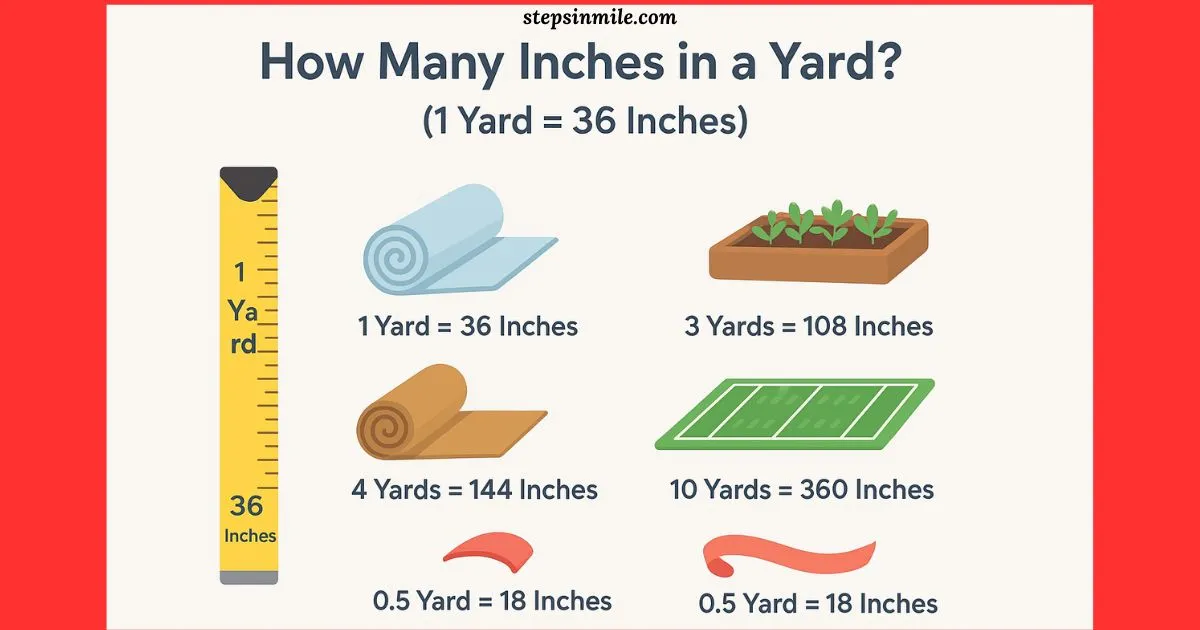
One yard equals exactly 36 inches. This standard measurement applies across all situations in the United States.
Let’s break down everything you need to know about yards to inches conversion with real-world examples you can use today.
Yards to Inches Conversion Table
| Yards | Inches | Feet |
| 0.25 yard | 9 inches | 0.75 feet |
| 0.5 yard | 18 inches | 1.5 feet |
| 1 yard | 36 inches | 3 feet |
| 2 yards | 72 inches | 6 feet |
| 3 yards | 108 inches | 9 feet |
| 4 yards | 144 inches | 12 feet |
| 5 yards | 180 inches | 15 feet |
| 10 yards | 360 inches | 30 feet |
What Exactly Is a Yard?
A yard is a unit of length used in the Imperial and US customary measurement systems. It’s one of the most common measurements you’ll encounter in everyday American life.
One yard equals three feet, which breaks down to 36 inches total. This measurement became standardized centuries ago and remains consistent today across all industries.
The Simple Answer
The Basic Conversion Formula
1 yard = 36 inches. That’s the golden rule you need to remember for any conversion.
Here’s the simple math behind it: 1 yard equals 3 feet, and 1 foot equals 12 inches. Multiply 3 feet by 12 inches, and you get 36 inches.
Think of it as three dozen inches make one yard. This memory trick helps you recall the conversion quickly without calculating each time.
5 Practical Examples of Converting Yards to Inches
Example 1: Buying Fabric for a Sewing Project
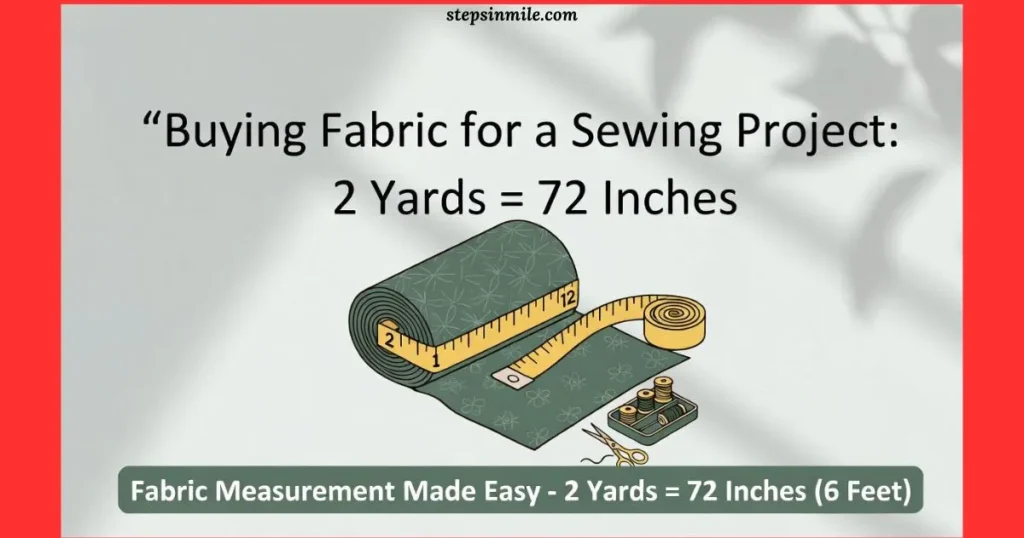
You’re at the fabric store and need 2 yards of material for new curtains. How many inches is that?
Calculation: 2 yards × 36 = 72 inches. You’ll be taking home 72 inches of fabric, which equals 6 feet.
This conversion matters because some patterns list measurements in inches while stores sell in yards. Knowing both measurements ensures you purchase the correct amount without waste.
Example 2: Measuring Your Garden Space
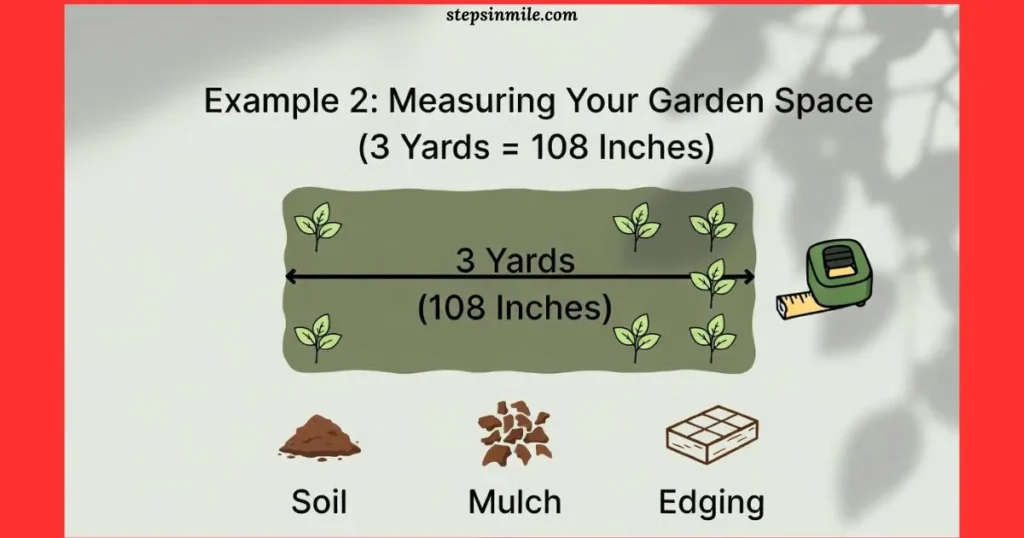
Your garden bed measures 3 yards long. You want to know the exact measurement in inches for plant spacing.
Calculation: 3 yards × 36 = 108 inches. Your garden bed is 108 inches from end to end, which equals 9 feet.
Garden planning becomes easier when you work in inches. You can precisely calculate how many plants fit in the space with proper spacing between each one.
Example 3: Football Field Measurements
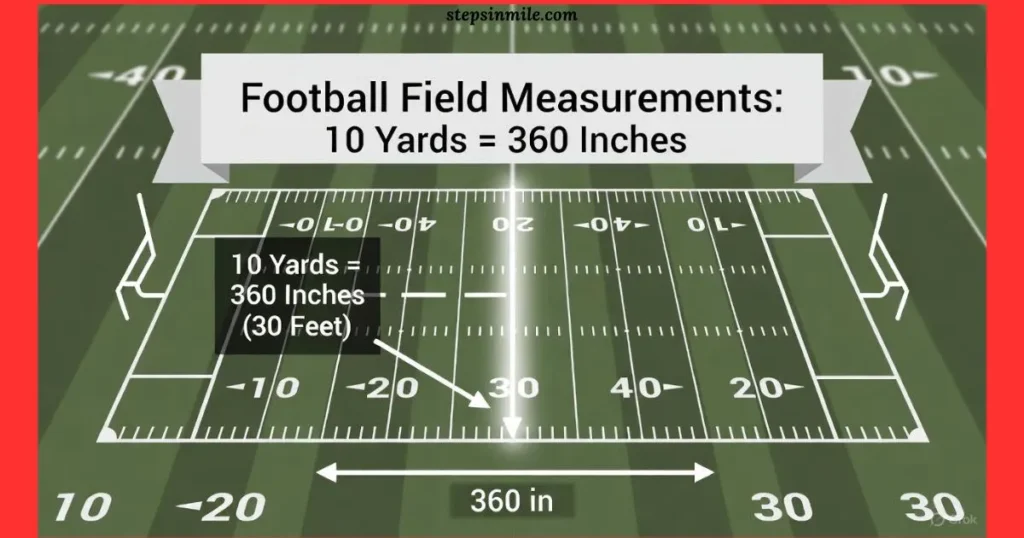
The 10-yard line on a football field is a familiar sight. But how many inches does that represent?
Calculation: 10 yards × 36 = 360 inches. That’s 30 feet of field distance, which seems much longer when you think about it in inches.
American football uses yards as the primary unit because it provides a practical scale for the game. The entire field measures 100 yards or 3,600 inches from goal line to goal line.
Example 4: Ordering Carpet or Flooring
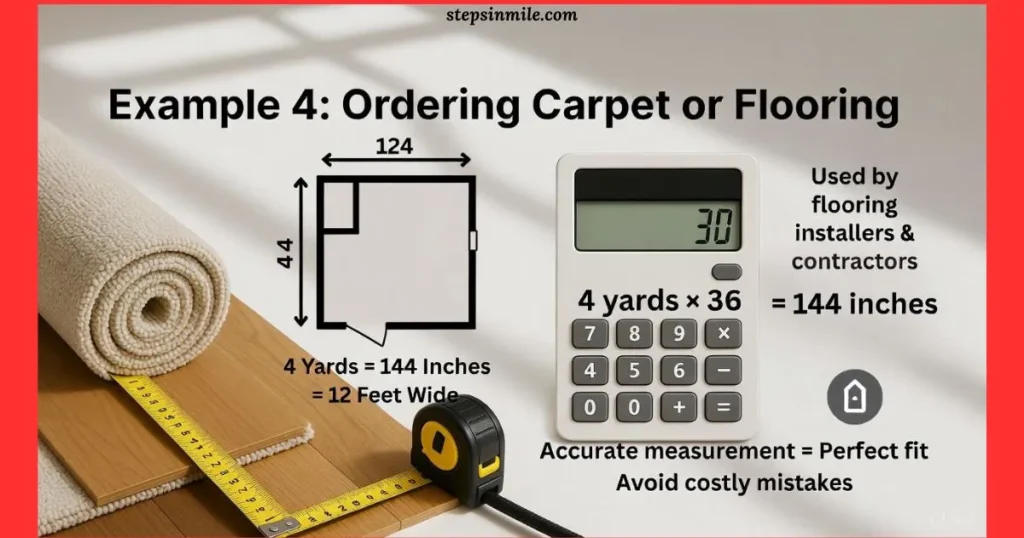
You need carpet for a room that’s 4 yards wide. The installer asks for the measurement in inches.
Calculation: 4 yards × 36 = 144 inches. That’s exactly 12 feet wide, which helps you visualize the room size better.
Flooring contractors often work in yards for pricing but need inch measurements for precise cutting and installation. Converting between units prevents costly mistakes.
Example 5: Crafting and Ribbon Projects
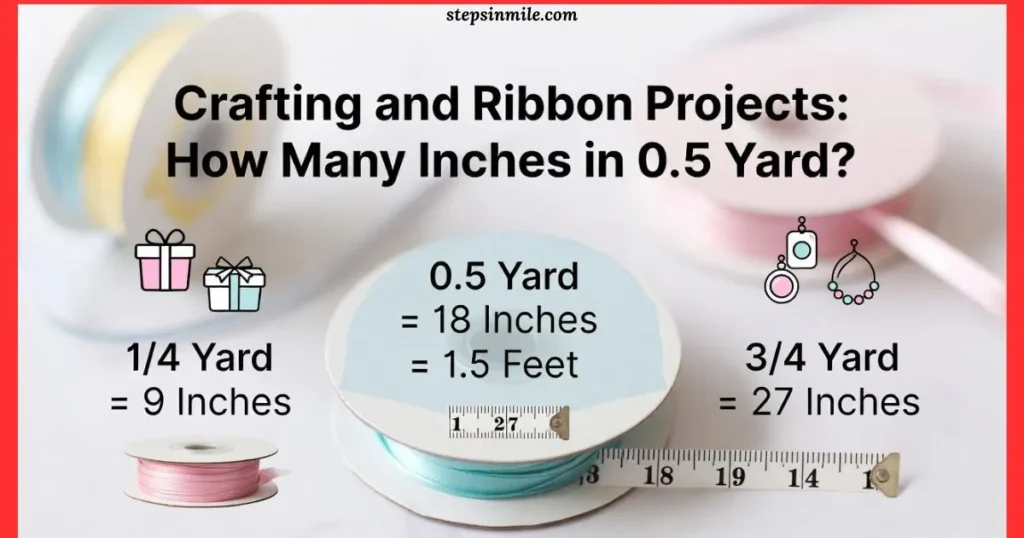
Your craft project needs 0.5 yards (half a yard) of ribbon. How many inches should you cut?
Calculation: 0.5 yards × 36 = 18 inches. Half a yard gives you 18 inches of ribbon, which equals 1.5 feet.
Fractional yard measurements are common in crafting. Quarter yards equal 9 inches, and three-quarter yards equal 27 inches.
Other Common Yard Conversions
How Many Feet in a Yard?
1 yard equals exactly 3 feet. This is the foundational conversion for understanding all yard-based measurements.
How Many Yards in a Mile?
1 mile contains 1,760 yards. This larger-scale conversion helps with distance measurements and running calculations.
Yards vs. Meters: What’s the Difference?
One yard equals approximately 0.914 meters. The metric system uses meters while the US primarily uses yards.
Other Post: How Big is 200 Acres?
Question’s
Is one yard exactly 3 feet?
Yes, one yard is exactly 3 feet. This is a precise, standardized conversion used throughout the United States. The relationship between yards and feet never changes.
How wide is a yard of fabric?
Fabric length is always 36 inches when sold by the yard, but width varies by fabric type. Quilting cotton typically measures 44-45 inches wide, while upholstery fabric ranges from 54-60 inches wide, and specialty fabrics can exceed 110 inches.
Is 12 inches 1 yard?
No, 12 inches equals 1 foot, not 1 yard. You need 36 inches to make 1 yard. This is a common confusion point—remember that 3 feet (or 36 inches) equal one yard.
Why is a yard called a yard?
The measurement “yard” comes from Old English “gerd,” meaning rod or stick. King Henry I standardized it as the distance from his nose to his outstretched thumb. The land term “yard” comes from Old English “geard,” meaning enclosed space.
How many yards make 1 mile?
1,760 yards equal 1 mile. Since 1 mile equals 5,280 feet and 1 yard equals 3 feet, divide 5,280 by 3 to get 1,760 yards per mile.
How much will 1 yard of dirt cover?
One cubic yard of dirt covers approximately 100 square feet at 3 inches deep. At 2 inches deep, it covers 162 square feet. The coverage varies based on your desired depth for landscaping projects.
Conclusion
One yard always equals 36 inches—this simple fact solves countless measurement challenges. Whether you’re buying fabric, planning a garden, or working on home improvements, this conversion is essential knowledge.

Fitness guru and lead author, crafting every post with passion. Certified trainer dedicated to your online fitness journey—empowering steps toward a healthier you!