200 acres equals 8,712,000 square feet. That’s a massive amount of space. To put it simply, you’re looking at land that covers serious ground.
This guide breaks down how big 200 acres really is using 8 real-world examples. You’ll see exact comparisons that make sense.
200 Acres
200 Acres into Different Units
200 acres equals 8,712,000 square feet. In square miles, 200 acres is 0.3125 square miles. That’s roughly one-third of a square mile. If you use the metric system, 200 acres converts to 809,371 square meters or 80.937 hectares.
How Big is 200 Acres? 8 Examples
Example 1 – Football Fields Comparison

200 acres equals approximately 151 American football fields. This includes both end zones. Each standard football field with end zones covers 1.32 acres according to official NFL field dimensions.
Example 2 – Central Park Sections

200 acres represents about 23% of New York’s Central Park. The entire park covers 843 acres total. So you’re looking at nearly one-quarter of this famous landmark.
Specific sections match up well. The Great Lawn (55 acres) plus Sheep Meadow (15 acres) combined with several smaller areas roughly equal 200 acres. These are spots millions of tourists visit yearly.
Example 3 – City Blocks

200 acres equals approximately 150-160 standard city blocks. Most urban city blocks in America measure between 2 to 2.5 acres each, depending on the city layout.
Manhattan blocks differ from Midwestern city blocks. A typical Chicago or Detroit block runs larger than dense Manhattan blocks. But the average works out to about 150 blocks for 200 acres.
Example 4 – Walmart Supercenters

200 acres fits about 36-40 Walmart Supercenter stores. Each Walmart Supercenter with its parking lot covers roughly 5 acres of land. This includes the building and all parking spaces.
Example 5 – Golf Courses

200 acres accommodates 2.5 to 3 regulation 18-hole golf courses. A standard 18-hole golf course requires between 60-80 acres depending on design and layout.
Each individual hole averages 3-4 acres when you include fairways, greens, roughs, and hazards. Championship courses run larger, while executive courses use less space.
Example 6 – Residential Subdivision
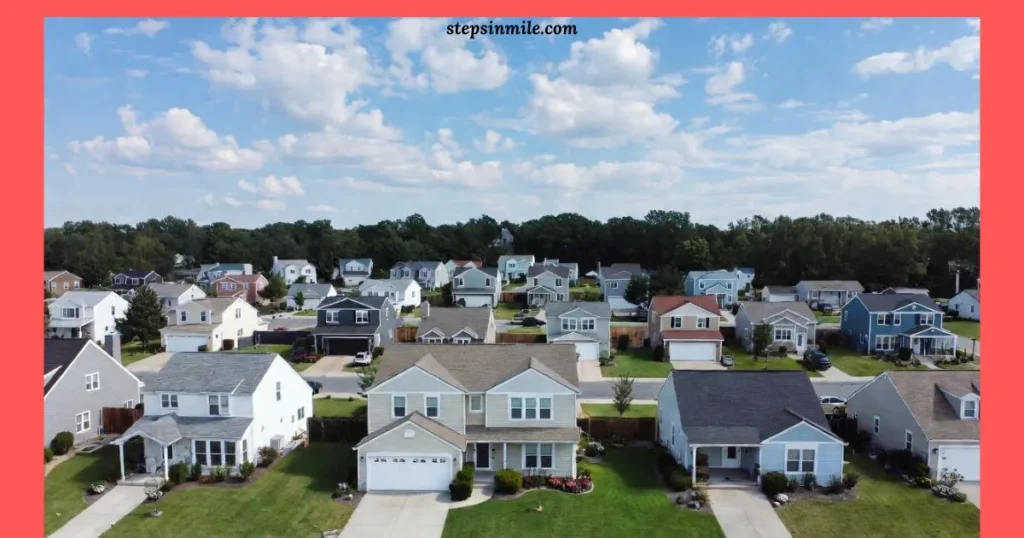
200 acres can hold 800-1,000 single-family homes. The math depends on lot sizes. Most suburban residential lots measure 0.20 to 0.25 acres per home.
This calculation includes streets, sidewalks, green spaces, and utility infrastructure. You can’t pack homes onto every square foot. Subdivision planning requires 15-25% of land for roads and common areas.
Example 7 – Parking Spaces
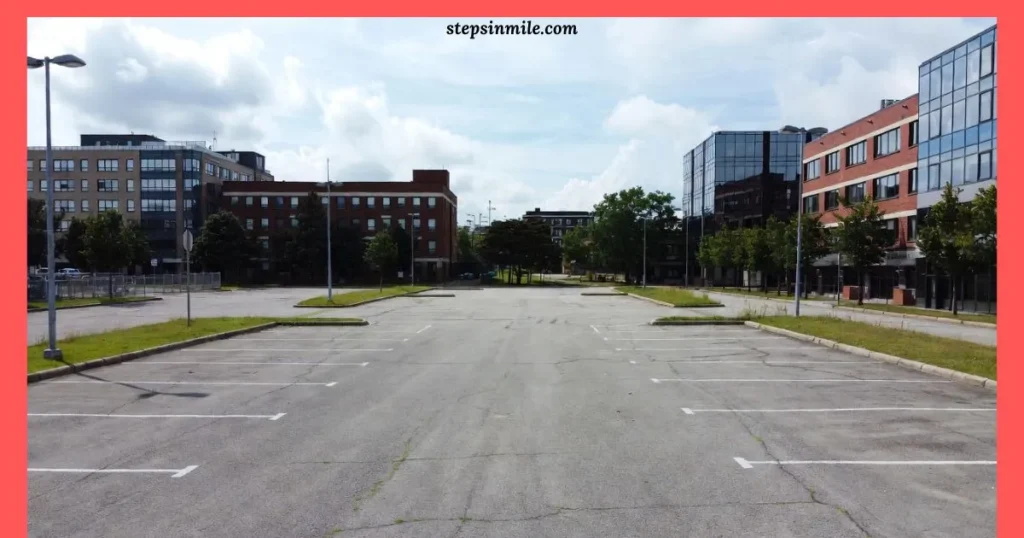
200 acres provides space for approximately 31,000-35,000 parking spaces. Each standard parking space requires 180-200 square feet including drive lanes and circulation space.
Major stadium parking lots and airport parking facilities operate on this scale. A large sports venue might use 50-100 acres just for parking. 200 acres handles massive events.
Example 8 – Agricultural Context – Farming Operations

200 acres represents a medium-sized family farm in America. According to USDA agricultural data, the average U.S. farm size is 445 acres, making 200 acres a solid working farm.
For crop production, 200 acres yields substantial harvests. Corn farming produces 30,000+ bushels annually on this acreage. Wheat production generates 10,000+ bushels depending on climate and soil quality.
(How Many Steps in a Mile?)
Walking and Driving Across 200 Acres
How Long Does It Take to Walk 200 Acres?
Walking the perimeter of 200 acres takes 15-20 minutes. The boundary measures 3,732 feet or roughly 0.7 miles around. At an average walking speed of 3 miles per hour, that’s a decent hike.
Driving Time Around 200 Acres
Driving the perimeter at 25 mph takes 2-3 minutes. That’s assuming you have an access road around the property. Most large parcels don’t have full perimeter roads.
Question’s
How long is 200 acres in miles?
200 acres equals 0.3125 square miles. If shaped as a square, each side measures 0.177 miles or 933 feet long.
How many football fields is 1 acre?
1 acre equals 0.76 football fields including end zones. A standard football field with end zones is 1.32 acres.
How long is 200 acres in kilometers?
200 acres equals 0.809 square kilometers. Each side of a square plot would be 0.284 kilometers or 284 meters.
What is the size of 1 acre land?
1 acre equals 43,560 square feet. As a square, it measures 208.7 feet × 208.7 feet. That’s roughly 90% of a football field without end zones.
How big is an acre visually?
1 acre is about the size of a football field without end zones. It equals roughly 16 tennis courts. Walking across takes 35 seconds at normal pace.
Is 1000 square feet 1 acre?
No, 1,000 square feet is only 2.3% of an acre. 1 acre equals 43,560 square feet, making it 43 times larger than 1,000 square feet.
How many acres is 1 km by 1 km?
1 square kilometer equals 247.1 acres. This measurement helps with international property comparisons and metric system conversions.
How many football pitches are 100 acres?
100 acres equals 75-76 American football fields or 57 soccer pitches. FIFA regulation soccer fields measure 1.76 acres each.
How long is 50 acres?
50 acres equals 2,178,000 square feet. A square plot has 466-foot sides. The perimeter measures 1,866 feet or 0.35 miles.
Final Thoughts
200 acres is substantial land by any measure. Whether you picture 151 football fields, a quarter of Central Park, or 160 city blocks, the size becomes clear. This much space offers serious possibilities.

Fitness guru and lead author, crafting every post with passion. Certified trainer dedicated to your online fitness journey—empowering steps toward a healthier you!