Choosing the right door size can make or break your renovation project. Standard door dimensions vary by location and purpose, but understanding the basics saves time, money, and frustration.
This guide covers everything you need to know about door measurements in the United States, from interior bedrooms to exterior entryways.
Standard Door Sizes in the United States

Interior Door Dimensions – Width, Height & Thickness Standards
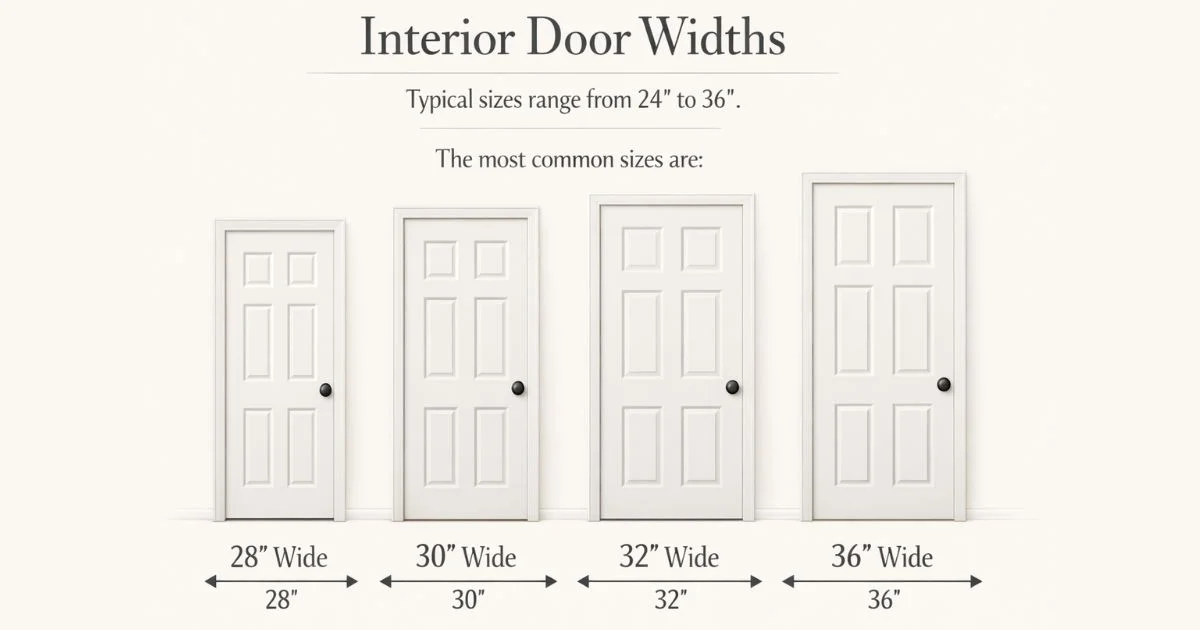
Interior door widths typically range from 24 inches to 36 inches. The most common sizes are 28″, 30″, 32″, and 36″ wide.
Bedroom doors usually measure 30 or 32 inches wide. This width allows furniture to pass through easily while maintaining privacy.
Bathroom doors often measure 28 to 32 inches wide. Smaller bathrooms may use 24-inch or 28-inch doors to save space.
The standard interior door height is 80 inches (6 feet 8 inches). Newer homes sometimes feature taller 84-inch or 96-inch doors for a more dramatic look.
Door thickness for interior applications is typically 1⅜ inches. Solid core doors and some premium options measure 1¾ inches thick for better sound insulation.
Closet doors range from 24 to 30 inches wide depending on the closet opening. Bi-fold closet doors often come in paired configurations that span wider openings.
Exterior Door Dimensions – Entry & Patio Door Standards
The standard front door size is 36 inches wide by 80 inches tall. This dimension has become the industry standard for main entryways across America.
Entry doors measure 1¾ inches thick for added security and weather resistance. This extra thickness accommodates better insulation and stronger locking mechanisms.
Double entry doors typically span 60 to 72 inches in total width. Each door panel usually measures 30 or 36 inches wide.
Patio doors come in sliding or French door styles. Standard sliding patio doors measure 60 or 72 inches wide, while French doors match similar dimensions.
Back doors and secondary entrances often use 32-inch or 36-inch doors. The width depends on the home’s design and the door’s intended use.
Actual vs. Nominal Sizes
Is a 36″ Door Actually 36″ Wide?
No — actual width is typically 35¾ inches or slightly less.
Allows space for frame and hinges.
Nominal vs Actual
Nominal size (e.g., 36″) is for easy communication.
Actual size is smaller to fit within the frame.
Rough Opening
For a 36″ door: usually 38 inches wide
Extra space for frame, shims, and leveling.
Clear Opening
At 90° open: ~32 inches clear passage
Critical for accessibility requirements.
Manufacturing Tolerances
Actual dimensions within ¼ inch of nominal
Ensures consistent fit across manufacturers.
Standard Door Dimensions in Metric (mm & cm)
Converting US Door Sizes to Millimeters
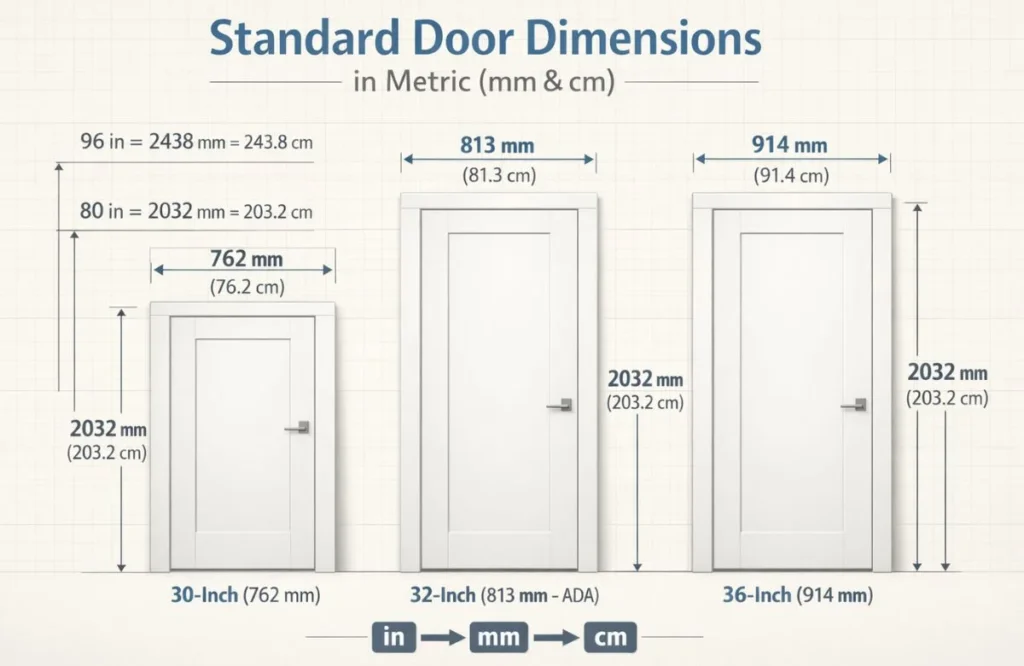
A 30-inch door equals approximately 762mm wide. This is one of the most common interior door sizes in metric measurements.
The 32-inch door converts to roughly 813mm. This size meets ADA accessibility requirements for clear opening width.
A 36-inch door measures about 914mm wide. This standard entry door size is nearly universal in American homes.
Standard door height of 80 inches equals 2032mm. Taller 96-inch doors measure 2438mm, which is popular in contemporary home designs.
Can a door be 700mm wide? Yes, but this converts to approximately 27.5 inches, which is not a standard US size. Custom modifications would be needed.
Can a door be 600mm wide? This equals roughly 23.6 inches, smaller than most standard US doors. Such narrow doors work for small closets but not living spaces.
Door width in centimeters is simply millimeters divided by 10. A 914mm door equals 91.4cm wide, making conversions straightforward.
| US Size (inches) | Millimeters (mm) | Centimeters (cm) |
|---|---|---|
| 📏 24″ | 610 mm | 61 cm |
| 📏 28″ | 711 mm | 71.1 cm |
| 📏 30″ | 762 mm | 76.2 cm |
| 📏 32″ | 813 mm | 81.3 cm |
| 📏 36″ | 914 mm | 91.4 cm |
| ⬆️ 80″ height | 2032 mm | 203.2 cm |
US vs. European Door Dimensions
International Door Size Comparisons
European standard doors typically measure 800mm, 900mm, or 1000mm wide. These sizes translate to approximately 31.5″, 35.4″, and 39.4″ respectively.
The most common European door height is 2000mm (78.7 inches). This is slightly shorter than the American standard of 80 inches.
Door thickness in Europe often measures 40mm (approximately 1.57 inches). This falls between standard US interior and exterior door thicknesses.
UK door sizes follow similar patterns to European standards but use both metric and imperial measurements. A standard UK interior door is 762mm or 838mm wide.
What size are European doors compared to US? Their 900mm doors (35.4″) are close to American 36-inch doors, but the difference requires frame adjustments.
Adapting international doors for US homes requires careful planning. Frame modifications and custom hardware may be necessary for proper installation.
Standard Internal Door Sizes
Choosing the Right Interior Door Dimensions
Bedroom doors typically measure 30 or 32 inches wide. The larger 32-inch option makes moving furniture easier and feels more spacious.
Master bedroom doors often use 36-inch widths for a grander entrance. This width also accommodates wheelchair access without compromise.
Bathroom door standard size ranges from 28 to 32 inches. A 32-inch door provides better accessibility and meets most universal design standards.
Powder room doors can be as narrow as 24 or 26 inches where space is limited. However, this creates tight access that some find uncomfortable.
Closet door widths depend on the storage type. Standard reach-in closets use 24 to 30-inch doors, while walk-in closets need 32 to 36-inch openings.
Hallway passage doors typically measure 30 or 32 inches wide. These doors separate spaces without creating bottlenecks in traffic flow.
ADA-compliant door width requires a minimum 32-inch clear opening when the door is open 90 degrees. This usually means installing a 36-inch door to account for frame thickness.
Laundry room doors should be at least 32 inches wide. This accommodates moving appliances in and out during installation or replacement.
Home office doors work well at 30 or 32 inches wide. Larger 36-inch doors create a more professional appearance and improve accessibility.
More Post: Standard Pillow Dimensions & Measurements
Question’s
What are the standard dimensions of a door?
The most common standard door dimensions in the US are 36 inches wide by 80 inches tall for entry doors. Interior doors typically measure 30 or 32 inches wide by 80 inches tall. Door thickness is usually 1⅜ inches for interior doors and 1¾ inches for exterior doors.
Is a 36 door actually 36?
No, a 36-inch door measures approximately 35¾ inches in actual width. The nominal size of 36 inches refers to the door opening size, not the door’s exact physical dimensions. This difference allows proper clearance for the frame, hinges, and smooth operation.
What is a standard door size in mm?
Standard door sizes in millimeters are 762mm (30″), 813mm (32″), and 914mm (36″) for width. The standard height of 80 inches equals 2032mm. These metric conversions help when working with international door products or specifications.
Can a door be 700mm wide?
Yes, a 700mm door (approximately 27.5 inches) can exist but is not a standard US size. This width is narrower than typical interior doors and would require custom ordering or frame modifications. It might work for small closets or utility spaces.
What size are European doors?
European standard door widths are typically 800mm, 900mm, or 1000mm (31.5″, 35.4″, or 39.4″). The standard height is 2000mm (78.7 inches), which is slightly shorter than American doors. European door thickness usually measures 40mm (1.57 inches).
Can a door be 600mm wide?
A 600mm door (23.6 inches) is extremely narrow by US standards. While technically possible for small closets or storage areas, this width is not practical for living spaces. Most building codes require wider doors for habitable rooms and accessibility.
How wide is a door in CM?
Door widths in centimeters: A 30-inch door equals 76.2cm, a 32-inch door equals 81.3cm, and a 36-inch door equals 91.4cm. Standard door height of 80 inches equals 203.2cm. Converting from inches to centimeters requires multiplying by 2.54.
Is a 32 door actually 32 wide?
No, a 32-inch door has an actual width of approximately 31¾ inches. Like all nominal door sizes, the labeled size refers to the rough opening dimension rather than the door’s true physical measurement. This sizing convention ensures proper installation clearances.
What are standard internal door sizes?
Standard internal door sizes in the US include widths of 24″, 28″, 30″, 32″, and 36″ with a height of 80 inches. The most common widths are 30 and 32 inches for bedrooms and bathrooms. Interior door thickness is typically 1⅜ inches for hollow core and solid core options.
Conclusion
Standard door dimensions and measurements simplifies your home improvement projects. Most American homes use 30 to 36-inch widths with 80-inch heights for interior doors, while entry doors typically measure 36 by 80 inches.
Remember that nominal sizes differ from actual measurements. Always measure your existing openings carefully before ordering replacements. When in doubt, consult a professional to ensure proper fit and compliance with local building codes.

Fitness guru and lead author, crafting every post with passion. Certified trainer dedicated to your online fitness journey—empowering steps toward a healthier you!