Choosing the right pool table size can make or break your game room experience. Whether you’re setting up a home entertainment space or upgrading your current setup, understanding pool table dimensions is essential.
This guide breaks down everything you need to know about standard pool table measurements, room requirements, and how to pick the perfect size for your space.
Standard Pool Table Sizes and Dimensions
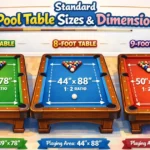
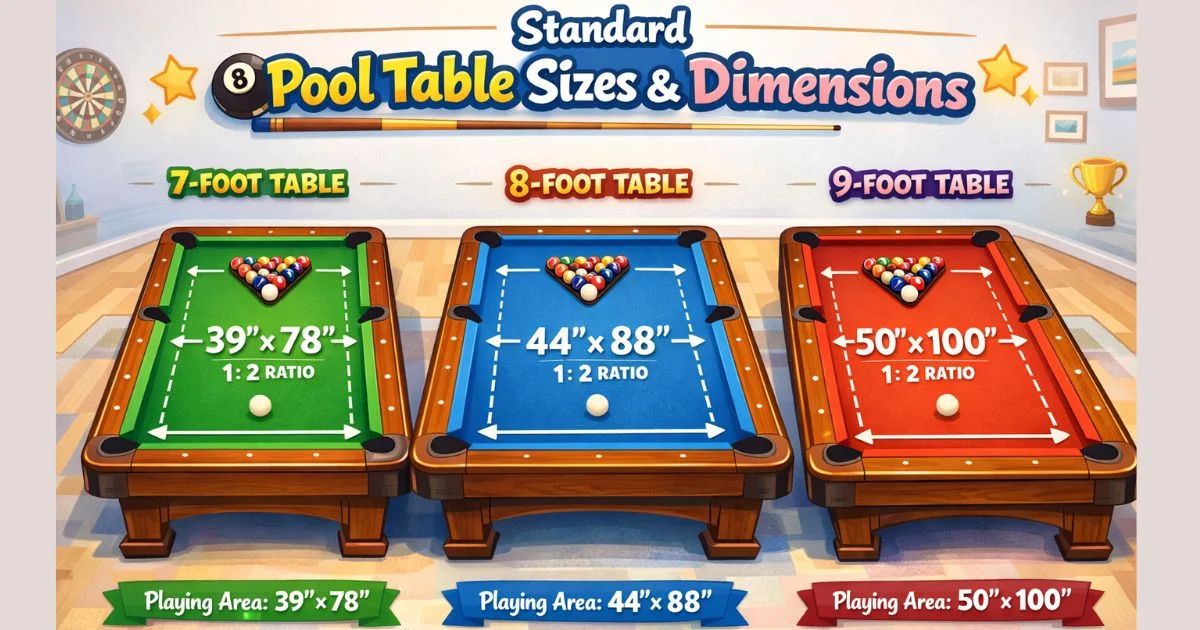
7-Foot Pool Table
(Bar / Casual Size)
Playing surface: 39″ × 78″ (99 × 198 cm)
Overall: ~3.5′ × 7′
Ideal for smaller rooms and casual play
Common in bars and pubs
8-Foot Pool Table
(Most Popular Home Size)
Playing surface: 44″ × 88″ (112 × 224 cm)
Overall: ~4′ × 8′
Best balance of space and authentic gameplay
Most common residential choice
9-Foot Pool Table
(Professional / Tournament Size)
Playing surface: 50″ × 100″ (127 × 254 cm)
Overall: ~4.5′ × 9′
Regulation size for professional tournaments
Preferred by serious players
7-Foot Pool Table Dimensions
A 7-foot table measures 39 inches wide by 78 inches long on the playing surface. The overall dimensions are typically 3.5 feet by 7 feet.
8-Foot Pool Table Dimensions
The 8-foot pool table features a 44-inch by 88-inch playing surface. Overall table size runs about 4 feet by 8 feet.
9-Foot Pool Table Dimensions
Tournament-size tables measure 50 inches by 100 inches on the playing surface. The full table spans 4.5 feet by 9 feet.
Room Size Requirements for Pool Tables
7-Foot Table
Minimum Room Size
Minimum: 13′ × 16′
Allows full 58″ cue strokes on all sides
8-Foot Table
Minimum Room Size
Minimum: 13.5′ × 17′
Most common for home game rooms
9-Foot Table
Minimum Room Size
Minimum: 14′ × 18′
Recommended: 15′ × 19′ or larger
For professional-level play
How to Choose the Right Pool Table Size
Should I buy a 7 or 8 foot pool table? This depends on your available space and skill goals.
A 7-foot table works great for families and recreational players. It fits smaller rooms and still delivers fun gameplay for casual matches.
Skill Level Considerations
Beginners often find 7-foot tables less intimidating. Shorter distances make pocketing balls easier while learning fundamentals.
Intermediate players benefit from 8-foot tables. This size develops proper shot-making skills without overwhelming new techniques.
Advanced players should consider 9-foot tables for serious practice. The larger surface challenges your accuracy and improves tournament readiness.
The 30 Rule in Pool
What is the 30 rule in pool? This guideline suggests that optimal shot difficulty occurs when the cue ball travels about 30 inches to the object ball.
On larger tables, achieving this ideal distance happens more frequently. This creates more challenging and rewarding gameplay for experienced players.
Pool Table Measurements Breakdown by Type
Understanding exact measurements helps you shop confidently and plan accurately. Here’s what you need to know about each dimension.
Table height typically ranges from 29.25 to 31 inches from floor to rail top. This standard height ensures comfortable shooting stance for most adults.
Playing Surface vs Overall Dimensions
The playing surface is the cloth-covered slate area where balls roll. Rails and outer edges add 4 to 6 inches to each side.
Overall dimensions include the entire table frame and rails. Always use overall measurements when planning room layout and doorway clearances.
Weight and Structural Specs
Seven-foot tables typically weigh 700 to 1,000 pounds. Most residential floors handle this weight without reinforcement.
Eight-foot tables range from 1,000 to 1,200 pounds. The slate bed accounts for most of this weight, providing the playing surface stability.
Nine-foot tables can exceed 1,300 pounds. Check your floor joists and subflooring before installation, especially in upper-level rooms or older homes.
Pocket and Rail Measurements
Corner pockets measure approximately 4.5 to 5.5 inches wide. Side pockets run slightly larger at 5 to 5.5 inches.
Rails (cushions) stand about 1.5 inches high from the playing surface. Quality rails use natural gum rubber for consistent ball rebound.
FAQ’s
What is the size of a standard pool table?
The most common standard pool table is 8 feet long with a 44-inch by 88-inch playing surface. This size balances space efficiency with authentic gameplay for home use.
Are pub pool tables 6ft or 7ft?
Most pub pool tables measure 7 feet long. Some bars install 6-foot tables in very tight spaces, but 7-foot remains the bar industry standard.
Is a 7ft pool table small?
A 7-foot table is considered small compared to regulation size but works perfectly for homes. It’s excellent for recreational play and fits most basement or garage game rooms comfortably.
What is the size of an 8 ball pool table in CM?
An 8-foot pool table measures approximately 112 cm by 224 cm for the playing surface. The overall table dimensions reach about 122 cm by 244 cm including rails.
How much space is needed for an 8 pool table?
You need roughly 13.5 feet by 17 feet of clear floor space for an 8-foot table. This allows standard 58-inch cues to move freely around all sides.
What is the standard 8ft table size?
The standard 8-foot table features a 44-inch by 88-inch playing surface. Overall dimensions measure approximately 4 feet by 8 feet including the rails and frame.
Should I buy a 7 or 8 foot pool table?
Choose a 7-foot table if your room is under 14 feet in any direction or you play casually. Pick an 8-foot table if you have adequate space and want more challenging gameplay.
What is the 30 rule in pool?
The 30 rule suggests optimal shot difficulty when the cue ball travels about 30 inches to the object ball. Larger tables create this challenging distance more frequently during games.
Is a 9 foot pool table too big?
A 9-foot table isn’t too big if you have 14 feet by 18 feet of clear space and play seriously. For casual home use, most players find 8-foot tables more practical.
Conclusion
Selecting the right pool table dimensions transforms your game room from cramped to comfortable. Measure your space carefully, consider your skill level, and choose a size that matches your needs.
An 8-foot table satisfies most homeowners, while 7-foot tables work better for tight spaces. Remember to account for cue clearance and future moving challenges before making your final decision.

Fitness guru and lead author, crafting every post with passion. Certified trainer dedicated to your online fitness journey—empowering steps toward a healthier you!