Remember: consistency beats intensity. Walking 10,000 steps six days weekly outperforms 20,000 steps twice a week. Build a sustainable habit, not a temporary sprint.
The truth? 10,000 steps isn’t a magic formula. It’s a marketing number from the 1960s. Science now shows you might need more—or less—depending on your goals, age, and current fitness level.
This guide breaks down exactly how many steps you need based on research, not myths. You’ll learn why some people walk 15,000 steps daily and still don’t lose weight, plus simple tweaks to make every step count more.
The Truth About Steps and Weight Loss
The famous 10,000-step goal came from a Japanese pedometer company in 1965. It wasn’t based on health research. It was a clever marketing strategy that stuck.
Recent studies tell a different story. Research from the National Institutes of Health found that 8,000 steps per day reduced early death risk significantly. Going beyond 12,000 steps didn’t add much extra benefit for most adults.
Here’s the weight loss math: One pound of fat equals 3,500 calories. Walking burns roughly 0.04 calories per step for an average person. That means you’d need about 87,500 steps to burn one pound—if diet stayed the same.
But calorie deficit is king. You could walk 20,000 steps daily and gain weight if you’re eating too much. The American Council on Exercise confirms that nutrition creates 80% of weight loss results. Steps boost the remaining 20%.
How Many Steps for Weight Loss Based on Your Goals
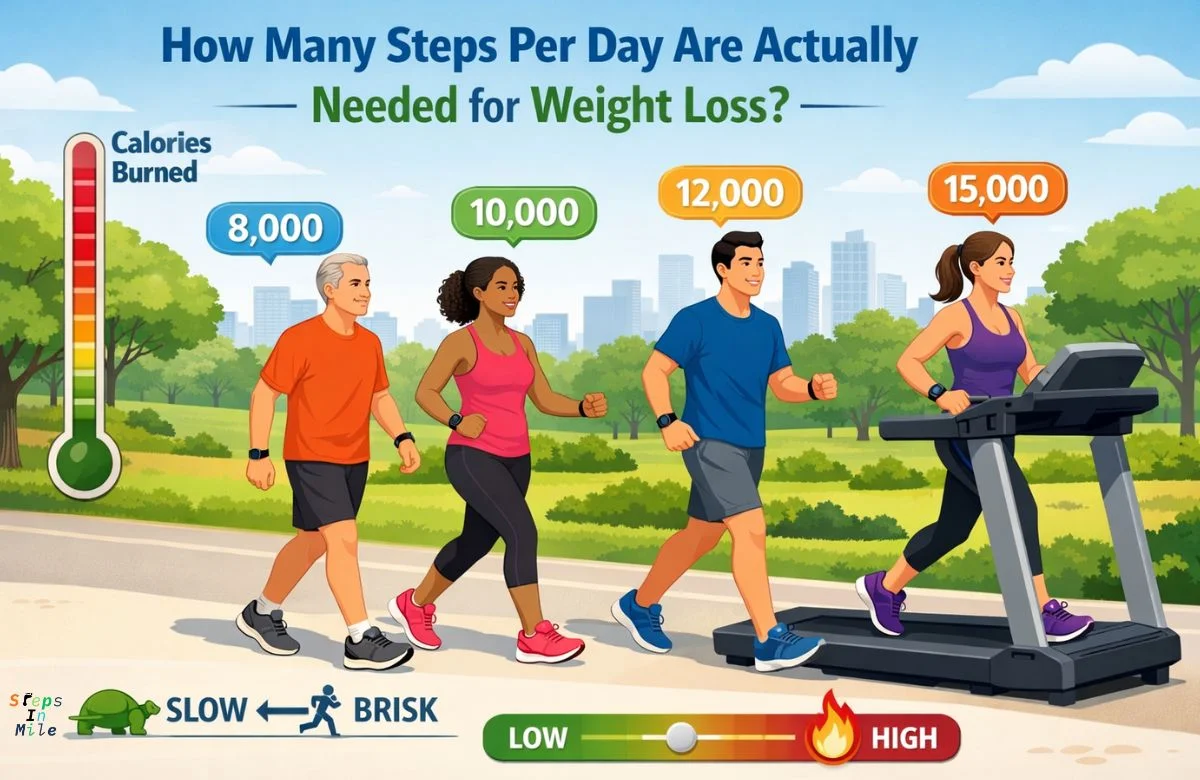
Want to lose 1 pound per week? Aim for 10,000-12,000 steps daily while cutting 250 calories from your diet. This creates the 500-calorie daily deficit needed for steady fat loss.
Targeting 2 pounds per week? You’ll need 12,000-15,000 steps combined with a 500-calorie diet reduction. This aggressive approach requires consistency and isn’t suitable for everyone.
For faster results (3+ pounds weekly), some people hit 15,000-18,000 steps. But doctors warn this pace can backfire. Your metabolism may slow down, and muscle loss often accompanies rapid weight loss.
Age changes your step target. Adults aged 20-40 can handle 12,000-15,000 steps more easily. Between 40-60 years old, aim for 10,000-12,000 steps. After 60, research from Harvard Medical School suggests 8,000-10,000 steps provides excellent health benefits without overdoing it.
Your starting fitness matters most. If you’re currently doing 3,000 steps daily, jumping to 15,000 will overwhelm your body. Add 500-1,000 steps each week instead. Gradual increases prevent injuries and burnout.
| Weight Loss Goal | Daily Steps Needed | Additional Diet Change |
|---|---|---|
|
🔥
2 lbs per week Aggressive & effective |
12,000 – 15,000 |
Cut 500 calories daily
Moderate deficit
|
|
⚡
1 lb per week Most recommended pace |
10,000 – 12,000 |
Cut 250 calories daily
Gentle deficit
|
|
✅
Maintain current weight Stay healthy & active |
8,000 – 10,000 |
Balanced eating
No restrictions needed
|
Why You’re Not Losing Weight Despite Walking 15,000 Steps a Day
Eating Back the Calories
Fitness trackers often overestimate calorie burn by 20-30%. Your 500-calorie walk might only burn 350 calories, while that post-walk smoothie packs 600.
Body Adaptation
After 6-8 weeks of the same routine, your body becomes more efficient and burns fewer calories for the identical activity. This is metabolic adaptation.
Walking Pace Matters
Strolling at 2 mph burns about half the calories of brisk walking at 4 mph. If your heart rate isn’t elevated, you’re not creating a meaningful deficit.
Missing Strength Training
Muscle burns calories 24/7. Walking alone doesn’t build significant muscle. ACSM recommends combining cardio with resistance training twice weekly.
Stress & Poor Sleep
High cortisol from stress promotes fat storage, especially abdominal fat. Less than 7 hours of sleep disrupts hunger hormones leptin and ghrelin.
The Scale Can Mislead
You may be losing fat while gaining muscle. Clothes fit better even if weight stays the same. Use measurements and photos for true progress tracking.
How to Make Your Steps Count More for Weight Loss
Speed Up Your Pace
Target 3.5–4 mph (100–120 steps per minute). This puts you in the fat-burning zone. Test: slightly breathless but able to speak in short sentences.
Add Hills & Stairs
Uphill walking burns up to 50% more calories than flat ground. Even a 5% treadmill incline boosts expenditure and builds calorie-burning muscle in glutes and hamstrings.
Try the 3-3-3 Rule
Brisk for 3 minutes, moderate for 3 minutes, slow for 3 minutes—repeat. This interval method keeps your metabolism elevated for hours afterward.
Walk Before Meals
Studies show 15-minute post-meal walks improve blood sugar control better than one long walk, reducing insulin and fat-storage signals.
Track Honestly
Use a dedicated fitness tracker (not phone sensors). Log all food accurately—small bites and tastes can add hundreds of hidden calories daily.
Time Strategically
Morning walks before breakfast tap fat stores when glycogen is low. Evening walks curb dinner cravings. Choose the time that fits your routine best.
Walk before meals. A study in Diabetes Care found that 15-minute walks after meals improved blood sugar control better than one long walk. Better blood sugar means less insulin, which reduces fat storage signals.
Question’s
How many steps should you take a day to lose 2 pounds a week?
You need 12,000-15,000 steps combined with a 500-calorie diet reduction. This creates the 1,000-calorie daily deficit required to lose 2 pounds weekly. However, this aggressive rate isn’t sustainable long-term for most people. Your body may adapt by slowing metabolism after 4-6 weeks.
How many steps burn 1 kg?
Burning 1 kilogram (2.2 pounds) requires approximately 192,500 steps if diet remains constant. Since 1 kg equals 7,700 calories and each step burns about 0.04 calories, the math adds up. Realistically, you’ll achieve this faster by combining 10,000-12,000 daily steps with smart eating habits over 2-3 weeks.
Is 20,000 steps a day good?
For most people, 20,000 steps is excessive and increases injury risk. Studies show diminishing returns after 12,000-15,000 steps. Ultra-high step counts work for athletes or those in active jobs, but average adults don’t need this volume. Focus on step quality and intensity rather than extreme quantity.
Will walking 5000 steps a day help you lose weight?
Yes, but progress will be slow. Going from sedentary (2,000 steps) to 5,000 steps burns an extra 120-150 calories daily. That’s about 1 pound lost every 3-4 weeks without diet changes. For faster results, gradually increase to 8,000-10,000 steps while monitoring your food intake.
Can I lose 5kg in a month by walking?
Losing 5 kg (11 pounds) in one month is ambitious and requires 15,000+ daily steps plus strict calorie control. Most health experts recommend 2-4 kg monthly for sustainable fat loss. Rapid weight loss often includes water weight and muscle loss, not just fat. Set a 2-3 month timeline instead.
Why am I not losing weight walking 15000 steps a day?
The most common reason is compensatory eating—you’re consuming more calories because you feel hungry after long walks. Other culprits include poor sleep, high stress levels, metabolic adaptation, or underlying health conditions like thyroid issues. Track your food intake for one week to identify hidden calories.
What is the 3-3-3 rule walking?
The 3-3-3 rule means walking 3 minutes fast, 3 minutes moderate, 3 minutes slow, then repeating. This interval method keeps your heart rate variable, preventing your body from adapting to one steady pace. It burns more calories than constant-speed walking and improves cardiovascular fitness faster.
How did Kelly Clarkson lose weight so quickly?
Kelly Clarkson followed a plant-based diet rich in whole foods and increased her daily walking habit. She also worked with medical professionals to address thyroid medication needs. Her approach combined nutrition, movement, and proper medical care—not extreme exercise or fad diets. Sustainable lifestyle changes create lasting results.
Is it better to walk fast or slow?
Walking fast burns significantly more calories.
A 160-pound person burns 314 calories per hour at 3.5 mph versus 204 calories at 2 mph. Fast walking also improves cardiovascular fitness and builds more leg muscle. However, start at your comfortable pace and gradually increase speed over weeks to prevent injury.
Final Thoughts
There’s no perfect step count that works for everyone. Your ideal daily steps depend on age, current fitness, diet quality, and weight loss goals.
Start where you are today. Add 500-1,000 steps weekly until you reach 8,000-12,000 steps daily. Pair your walking routine with portion control and you’ll see consistent results.

Fitness guru and lead author, crafting every post with passion. Certified trainer dedicated to your online fitness journey—empowering steps toward a healthier you!