You’ve heard about the 10,000 steps challenge. Maybe you’re tracking your daily movement. But here’s what everyone really wants to know: how many miles is 10000 steps?
The answer? About 5 miles for most adults. But here’s the catch: it changes based on your stride length and whether you’re walking, jogging, or running. Let’s break down exactly what those 10,000 steps mean for your distance and time.
How Many Miles is 10000 Steps?
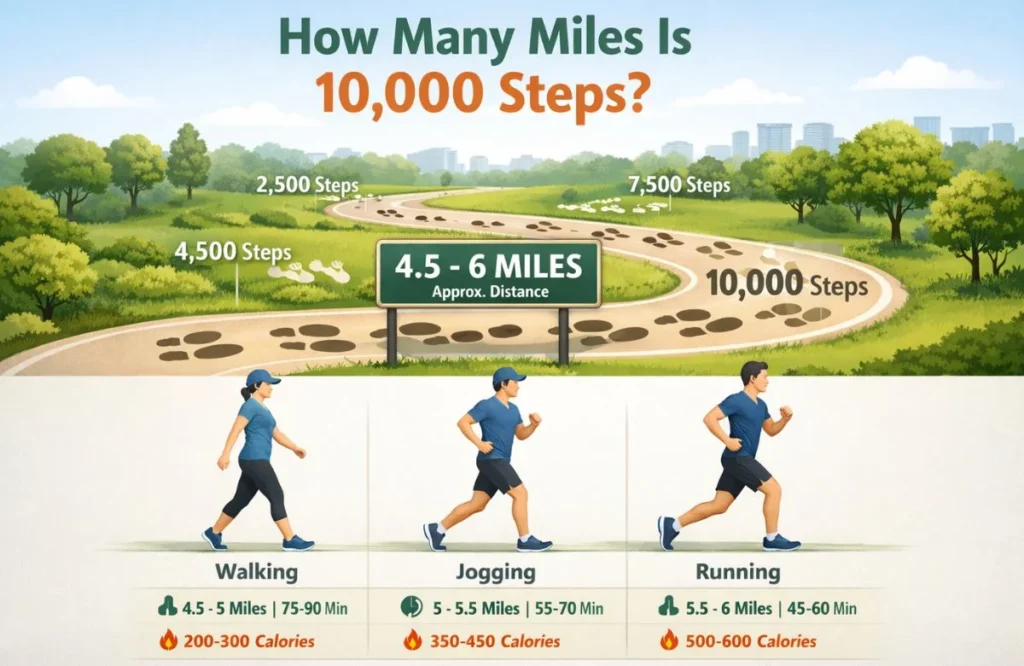
Ten thousand steps equals roughly 4.5 to 5.5 miles for the average person. That’s not a random guess. It’s based on how your body moves.
Your stride length makes all the difference. Most men average about 2.5 feet per step. Women typically hit around 2.2 feet. Do the math, and those numbers add up to different distances.
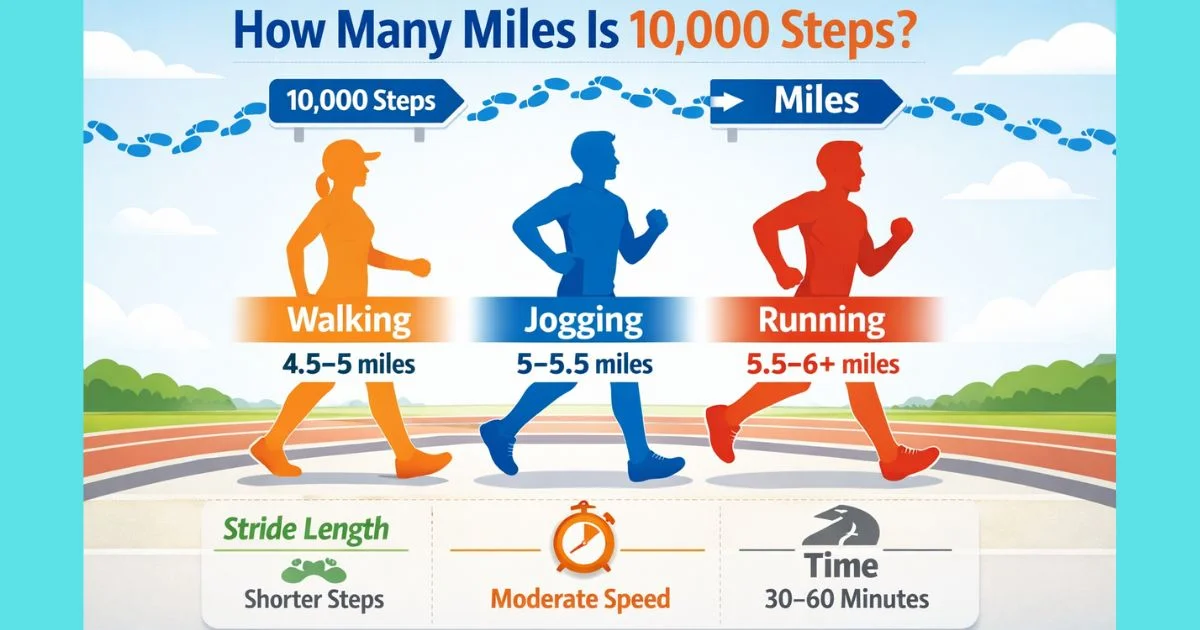
Here’s what 10,000 steps looks like:
- Walking: 4.5 to 5 miles
- Jogging: 5 to 5.5 miles
- Running: 5.5 to 6 miles
The faster you move, the longer your stride gets. Your height matters too. Taller people cover more ground with each step. Shorter folks need more steps to hit the same distance.
Walking 10000 Steps: Distance and Time
Walking 10,000 steps will take you about 4.5 to 5 miles. Your average stride while walking is 2.1 to 2.5 feet. That’s a comfortable, natural pace.
Time-wise, here’s what to expect:
- Leisurely walk (2.5 mph): 100 to 120 minutes
- Moderate pace (3.5 mph): 85 to 95 minutes
- Brisk walk (4 mph): 75 to 85 minutes
Think of it this way. A leisurely stroll around your neighborhood for about 90 minutes gets you there. Research shows walking 10,000 steps burns roughly 400 to 500 calories, depending on your weight and pace.
Jogging 10000 Steps: What to Expect
When you jog 10,000 steps, you’re covering 5 to 5.5 miles. Your stride opens up to 2.5 to 3 feet per step. That’s noticeably longer than walking.
Here’s your time breakdown:
- Light jog (5 mph): 60 to 66 minutes
- Moderate jog (6 mph): 50 to 55 minutes
You’ll burn 600 to 800 calories during this workout. That’s significantly more than walking the same step count. Your heart rate climbs higher. Your muscles work harder. The calorie expenditure reflects that extra effort.
Running 10000 Steps: The Fastest Route
Running changes everything. Ten thousand steps while running equals 5.5 to 6+ miles. Your stride stretches to 3 to 4 feet. That’s almost double a walking stride.
Time investment drops dramatically:
- Easy run (7 mph): 45 to 50 minutes
- Moderate run (8 mph): 40 to 45 minutes
- Fast run (9+ mph): 35 to 40 minutes
You’re burning 800 to 1000+ calories in less time. Runners hit their daily step goal faster because each stride covers more distance. The intensity level is much higher than walking or jogging.
Factors That Affect Your 10000 Steps Distance
Your Height and Stride Length
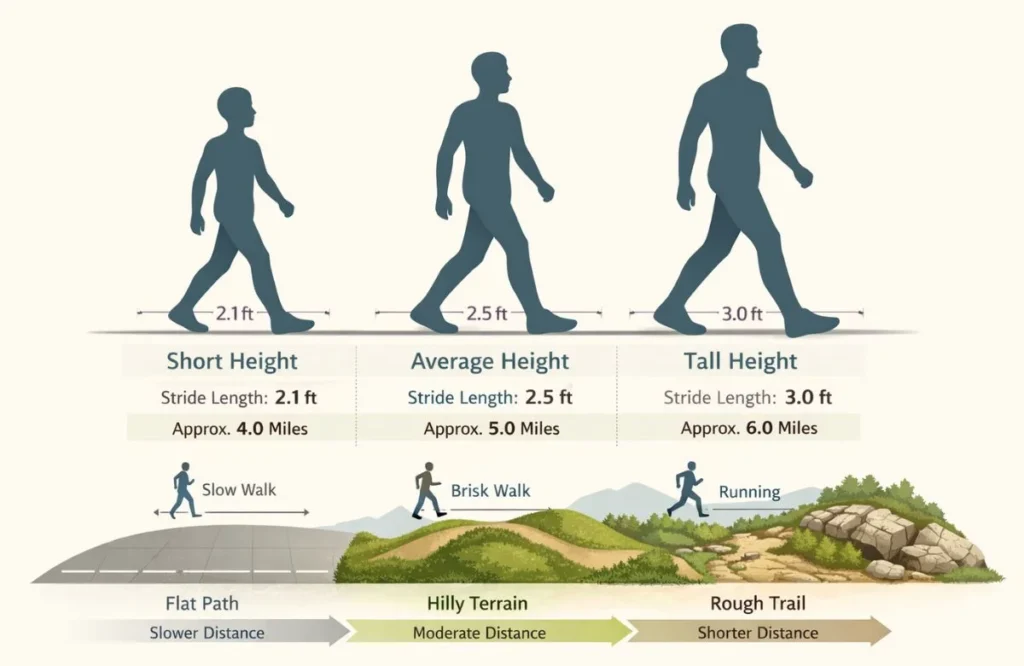
Taller people naturally cover more miles per 10000 steps. Someone who’s 6 feet tall might hit 5.5 miles. A person who’s 5’2″ might only reach 4.3 miles with the same step count.
Stride length is the measurement from heel strike to heel strike. You can measure yours easily. Walk 10 steps normally. Measure the total distance. Divide by 10. That’s your personal stride length.
The average stride length is about 2.1 to 2.5 feet for most adults, but personalization matters for accurate tracking.
Your Walking or Running Pace
Speed directly impacts distance covered. A faster pace means a longer stride. When you pick up speed, your body naturally extends each step.
A casual stroll gives you a shorter stride. A power walk or brisk pace extends it. Running maxes it out. This is why the same 10,000 steps equals different mileage at different speeds.
Terrain and Surface
Hills change your stride pattern completely. Walking uphill shortens your steps. Going downhill can lengthen them slightly. Flat ground gives you the most consistent stride.
Treadmill walking often produces slightly different results than outdoor walking. The belt assists your movement. Trails with rocks or roots force shorter, more careful steps. Smooth pavement allows your natural stride.
More Post: How Many Miles is 7K Steps?
FAQ’s
Can you lose weight walking 10,000 steps a day?
Yes, walking 10,000 steps daily can help you lose weight. You’ll burn 400 to 500 calories per session. That creates a caloric deficit if you’re not overeating.
How many miles is 10,000 steps worth?
Ten thousand steps is worth approximately 4.5 to 5.5 miles for most adults. Your exact distance depends on height, stride length, and pace.
How many steps is 30 minutes of walking?
Thirty minutes of walking equals about 3,000 to 4,000 steps. A moderate pace gets you closer to 3,500 steps. A brisk walk pushes you toward 4,000.
How many steps are in 60 minutes of walking?
Sixty minutes of walking gives you 6,000 to 8,000 steps. A leisurely pace lands around 6,000. A brisk pace pushes you to 8,000 steps.
Is it better to walk faster or longer?
Both approaches work. Walking faster increases intensity and cardiovascular benefits. Walking longer burns more total calories through duration.
Is 5000 steps in 45 minutes good?
Yes, 5,000 steps in 45 minutes is a solid pace. That’s roughly 3.3 to 3.5 mph. You’re walking at a moderate to brisk speed.
Does walking 10k burn belly fat?
Walking 10,000 steps helps burn overall body fat, including belly fat. But spot reduction is a myth. You can’t target where fat comes off your body.
What is the recommended steps per day by age?
Recommended daily steps vary by age and fitness level:
- Adults under 60: 8,000 to 10,000 steps
- Adults over 60: 6,000 to 8,000 steps
- Highly active individuals: 12,000+ steps
- Sedentary individuals starting out: 4,000 to 6,000 steps
Health organizations suggest that even 7,000 steps daily provides significant health benefits. The 10,000 step goal isn’t mandatory for everyone. It’s a general target that works for most people.
What are the disadvantages of walking 10000 steps?
Walking 10,000 steps daily can lead to overuse injuries if you jump in too fast. Shin splints, knee pain, and foot problems happen when you increase step count too quickly.
Conclusion
How many miles is 10000 steps? About 5 miles for most people. Walking gets you 4.5 to 5 miles. Jogging covers 5 to 5.5 miles. Running pushes past 5.5 miles.
Your stride length, pace, and height create variation. Measure your personal stride for accuracy. Start where you are. Build gradually toward your daily step goal. Track your progress and adjust based on how your body responds.

Fitness guru and lead author, crafting every post with passion. Certified trainer dedicated to your online fitness journey—empowering steps toward a healthier you!