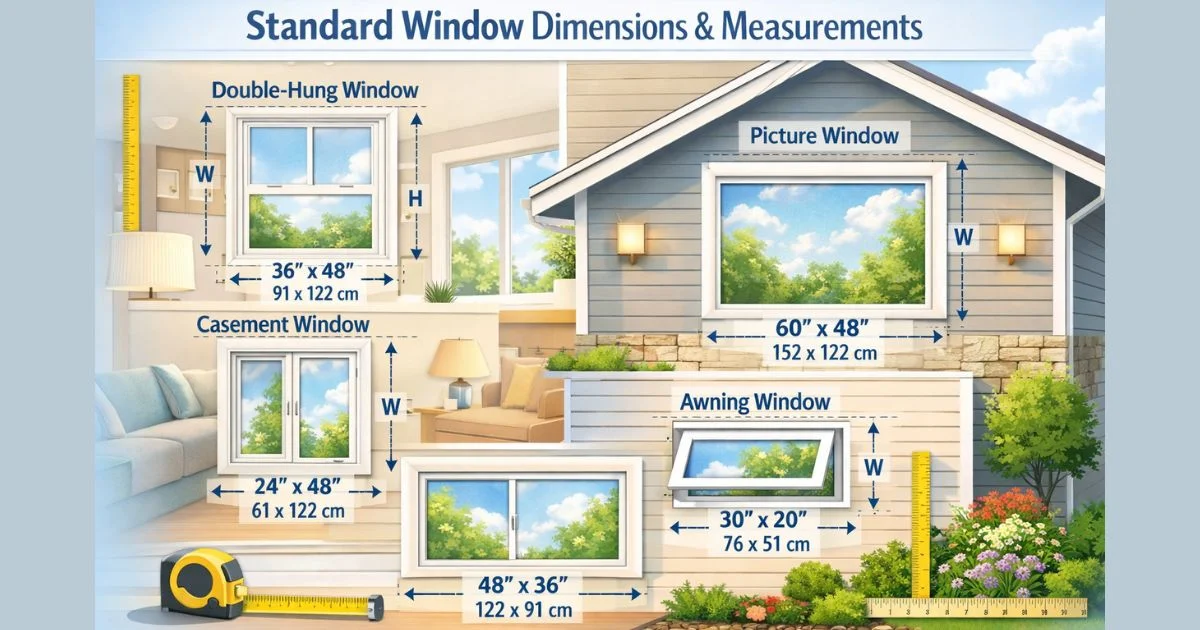
Standard window dimensions are pre-set sizes commonly used in residential construction, typically written as width × height in inches like 24×36 or 36×60.
Most homes use standard ranges such as 24–48 inches in width and 36–72 inches in height depending on room type and design needs.
These standard sizes help ensure easier installation, lower cost, and better compatibility with typical wall openings.
This guide breaks down everything about standard window sizes in simple terms. You’ll learn exact measurements, room-specific dimensions, and how to measure correctly.
What Are Standard Window Dimensions?
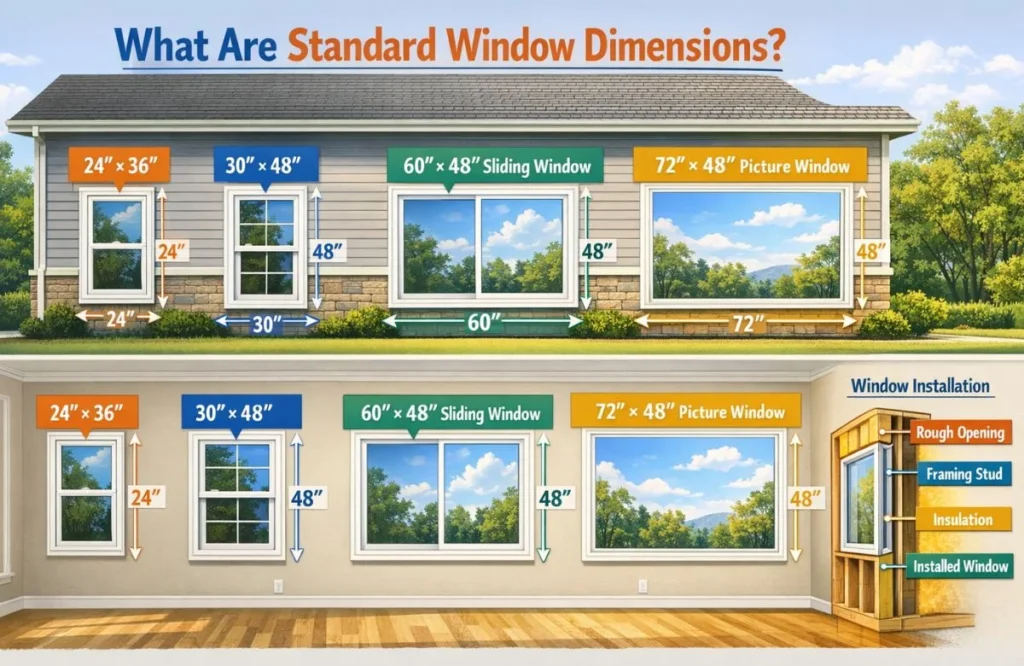
Standard window dimensions are pre-determined sizes that manufacturers produce most frequently. These common measurements fit typical wall openings in American homes built within the last 50 years.
Most window sizes are written as width × height. For example, a 24×36 window means 24 inches wide and 36 inches tall. This format stays consistent across all window types.
The rough opening is the framed space in your wall where the window fits. It’s usually 2-3 inches larger than the actual window measurement to allow proper installation and insulation.
Common Window Sizes (Double-Hung, Casement, Picture & More)

Double-hung windows are America’s most popular choice. Standard widths range from 24 to 48 inches. Common heights span 36 to 72 inches.
The most requested double-hung window dimensions include 24×36, 28×44, 32×48, 36×60, and 40×72 inches. These sizes fit most bedroom and living room applications perfectly.
Casement windows swing outward like doors. They typically come in widths from 16 to 48 inches. Heights range between 24 and 84 inches.
Popular casement measurements are 20×36, 24×48, 28×60, and 32×72 inches. These work well for spaces needing maximum ventilation and narrow wall sections.
Picture windows don’t open but provide expansive views. Standard widths start at 24 inches and go up to 96 inches. Heights typically range from 12 to 96 inches.
Common picture window sizes include 36×48, 48×60, 60×72, and 72×84 inches. Larger homes often use these for dramatic natural lighting in living rooms and entryways.
Sliding windows move horizontally on tracks. Standard widths range from 36 to 84 inches. Heights typically span 24 to 60 inches, with 36×24, 48×36, and 60×48 being most common.
Awning windows hinge at the top and tilt outward. They come in widths of 16 to 48 inches and heights of 16 to 48 inches. The 24×24 and 30×24 sizes work perfectly above doors or in bathrooms.
Standard Window Dimensions for Different Rooms
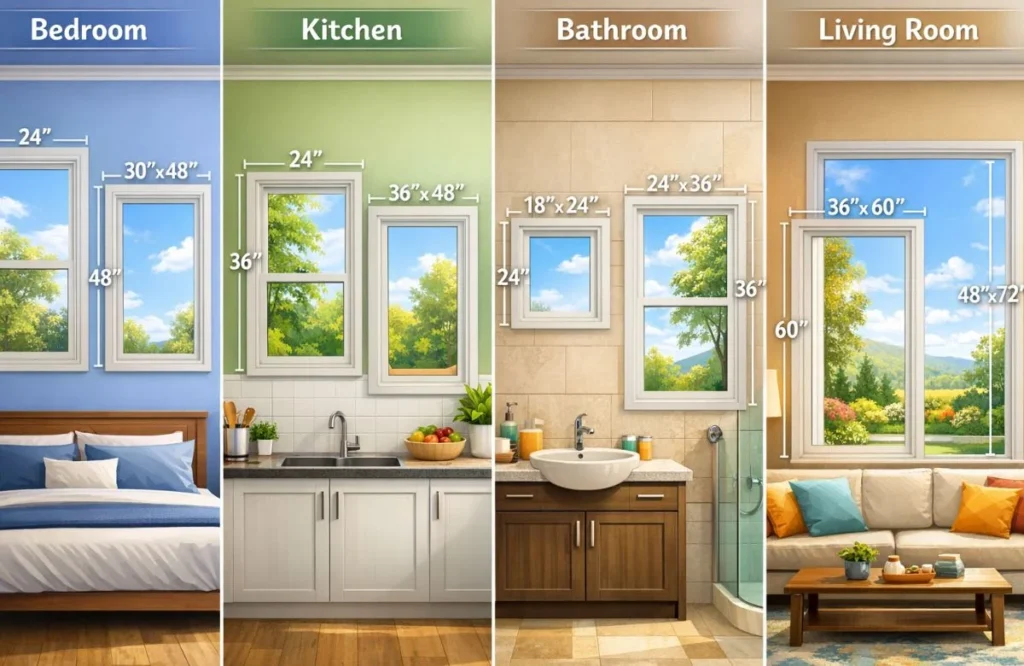
Bedroom window sizes typically measure 24×36, 30×48, or 36×60 inches. Building codes require bedroom windows to meet egress requirements for emergency escape routes.
The egress window must provide at least 5.7 square feet of opening area. The minimum opening width is 20 inches, and the minimum height is 24 inches. Bottom sills cannot be more than 44 inches above the floor.
Kitchen window measurements commonly range from 24×36 to 36×48 inches. Over-sink windows often measure 30×40 or 36×48 to provide good lighting while fitting above standard counter heights.
Kitchen windows should start at least 40 inches above the floor to clear countertops and backsplashes. Double or triple window combinations work well for wider kitchen spaces.
Bathroom window dimensions typically run smaller for privacy. Common sizes include 18×24, 24×30, and 24×36 inches. These windows often sit higher on walls—starting 48 to 60 inches from the floor.
Living room windows use larger dimensions to maximize natural light. Popular sizes include 36×60, 48×72, and 60×72 inches. Many living rooms combine multiple windows or add picture windows for dramatic effect.
Standard Window Size Conversions & Metric Measurements
| Inches (Width × Height) | Centimeters (cm) | Millimeters (mm) | Meters (approx.) |
|---|---|---|---|
| 🪟 24 × 36 inches | 61 × 91 cm | 610 × 914 mm | 0.61 × 0.91 m |
| 🪟 30 × 48 inches | 76 × 122 cm | 762 × 1219 mm | 0.76 × 1.22 m |
| 🪟 36 × 60 inches | 91 × 152 cm | 914 × 1524 mm | 0.91 × 1.52 m |
| 🪟 48 × 72 inches | 122 × 183 cm | 1219 × 1829 mm | 1.22 × 1.83 m |
Conversion Formulas
cm = inches × 2.54
mm = inches × 25.4
1 meter = 39.37 inches
International Standards
Europe & international: primarily millimeters
USA domestic: inches
Residential Range
Width: 0.6 – 1.8 meters
Height: 0.9 – 2.1 meters
Other Dimensions: Tennis Court Dimensions & Measurements
FAQ’s About Window Dimensions & Measurements
What are the dimensions of a standard window?
The most common standard window dimension in American homes is 24×36 inches. Other popular sizes include 28×44, 30×48, 36×60, and 48×72 inches. These measurements represent width by height in inches.
What is the standard window size in cm?
A typical 24×36 inch window measures 61×91 centimeters. The popular 36×60 size converts to 91×152 cm. Most residential windows range between 60-122 cm wide and 90-180 cm tall.
Is 30×60 a common window size?
Yes, 30×60 inches is a fairly common window dimension. It works well for bedrooms, offices, and living rooms. This size provides good natural light while meeting most building codes for ventilation and egress requirements.
How many meters is a standard window?
Most standard windows measure 0.6 to 1.2 meters wide and 0.9 to 1.8 meters tall. A typical 36×60 inch window equals approximately 0.91×1.52 meters. Larger picture windows can reach 2.4 meters or more.
Is 36×60 a standard window size?
Absolutely. The 36×60 inch dimension is one of the most popular standard sizes. It’s commonly used for double-hung and picture windows in bedrooms, living rooms, and dining areas throughout the USA.
How many mm is a standard window?
A common 24×36 inch window measures 610×914 millimeters. The popular 36×60 size equals 914×1524 mm. Most residential windows range from 600-1200 mm in width and 900-1800 mm in height.
What is the ideal window size?
The ideal window size depends on your room and purpose. Bedrooms typically need 24×36 to 36×60 inches. Kitchens work well with 30×48 or 36×48 inches. Living rooms benefit from larger 48×72 or 60×72 dimensions for maximum natural light.
How wide are common windows?
Common window widths range from 24 to 72 inches for most residential applications. The most frequently installed widths are 24, 30, 36, 48, and 60 inches. Picture windows and specialty applications can exceed 96 inches wide.
What is the normal size of a bedroom window?
The normal bedroom window measures between 24×36 and 36×60 inches. Building codes require bedrooms to have windows with at least 5.7 square feet of opening area for emergency egress. The most common bedroom size is 30×48 inches.
Conclusion
Standard window dimensions make home projects easier and more affordable. The most common sizes—24×36, 30×48, and 36×60 inches—fit most American homes perfectly.
Window measurements helps you plan better and avoid costly mistakes. Always measure three times at different points and use the smallest number when ordering.
Choose standard sizes whenever possible to save money and reduce installation time. Your windows will fit better and perform exactly as expected.

Fitness guru and lead author, crafting every post with passion. Certified trainer dedicated to your online fitness journey—empowering steps toward a healthier you!