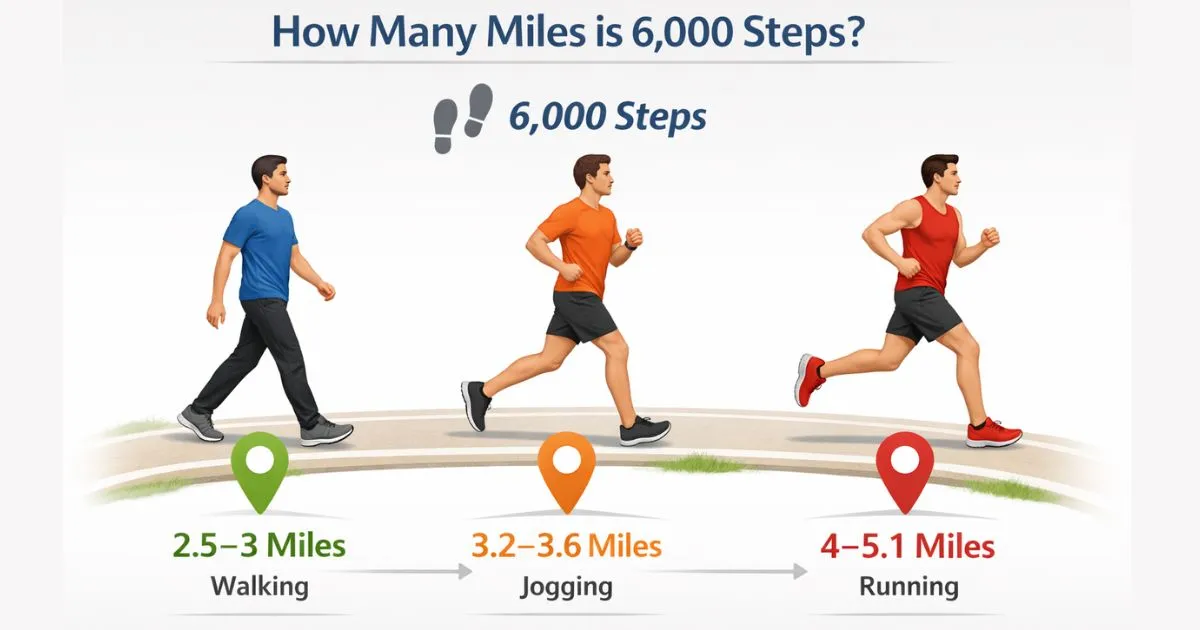
How many steps should you take in a day? Research shows 7,000–10,000 steps daily delivers strong health benefits, while even 2,500–5,000 steps improves heart and overall health.The idea of 10,000 steps is not a strict rule—it’s a guideline, with benefits starting at much lower counts.Your ideal daily steps depend on age, fitness level, and goals like weight loss, heart health, or staying active.
how many miles is 6k steps helps you set realistic fitness goals. Let’s break down the exact distances and what they mean for your health.
How Many Miles is 6,000 Steps for Different Activities?
Walking 6K Steps
- Distance: 2.5-2.84 miles
- Time: 50-60 minutes
- Best For: Casual strolls
Perfect for lunch breaks or neighborhood walks.
Jogging 6K Steps
- Distance: 3.2-3.6 miles
- Time: 35-45 minutes
- Best For: Cardio boost
Burn more calories with increased speed.
Running 6K Steps
- Distance: 4-5.1 miles
- Time: 25-35 minutes
- Best For: Efficiency
Cover ground quickly with explosive strides.
Distance Comparison for 6,000 Steps (miles)
Quick Comparison Table
| Activity | Stride Length (ft) | Distance (miles) | Time (minutes) | Notes |
|---|---|---|---|---|
| Walking | 2.2-2.5 | 2.5-2.84 | 50-60 | Men: 2.84 mi; Women: 2.5 mi |
| Jogging | 2.8-3.2 | 3.2-3.6 | 35-45 | Higher calorie burn |
| Running | 3.5-4.5 | 4-5.1 | 25-35 | Most efficient coverage |
Distances are approximate and based on average stride lengths. Individual results may vary by height, pace, and terrain.
Walking 6K Steps
Walking 6,000 steps covers approximately 2.5 to 2.84 miles. Men typically walk about 2.84 miles due to an average stride length of 2.5 feet. Women usually cover around 2.5 miles with a 2.2-foot stride.
A casual walking pace takes 50 to 60 minutes to complete 6K steps. This makes it perfect for lunch breaks or evening strolls around your neighborhood.
Jogging 6K Steps
Jogging increases your stride length to 2.8-3.2 feet per step. This means 6,000 steps while jogging covers about 3.2 to 3.6 miles.
You’ll finish 6K steps in 35 to 45 minutes at a jogging pace. The increased speed and cardiovascular intensity burn more calories than walking the same step count.
Running 6K Steps
Running maximizes your stride length to 3.5-4.5 feet per step. Your 6,000 steps now equal 4 to 5.1 miles of distance covered.
Runners complete this in just 25 to 35 minutes. The explosive movement and longer strides make running the most efficient way to cover ground with fewer steps.
Factors That Affect Your 6K Steps Distance
Your personal characteristics determine the exact distance you travel in 6,000 steps. Several biological and environmental factors play crucial roles.
Height directly correlates with stride length. A person who stands 5’10” naturally takes longer steps than someone who’s 5’2“. Taller individuals cover more ground per step.
Gender creates measurable differences in average step distance. Men’s longer legs typically produce a 2.5-foot stride, while women average 2.2 feet per step.
Walking surface and terrain significantly impact your stride. Uphill walks shorten your stride length naturally. Uneven surfaces like trails also reduce your step distance compared to smooth pavement.
Walking speed and intensity change everything. A brisk, purposeful walk lengthens your stride compared to a casual stroll. Your body mechanics adapt to match your intended pace.
| Height | Men (6K Steps) | Women (6K Steps) |
| 5’2″ | 2.44 miles | 2.42 miles |
| 5’6″ | 2.59 miles | 2.58 miles |
| 5’10” | 2.75 miles | 2.74 miles |
| 6’2″ | 2.91 miles | 2.89 miles |
Health Benefits of Walking 6000 Steps Daily

Walking 6,000 steps daily delivers powerful health improvements. A Northwestern Medicine study found that older adults taking 6,000-9,000 steps had 40-50% lower cardiovascular disease risk.
Your heart health improves dramatically with consistent 6K daily steps. The research tracked over 20,000 participants for six years. Results showed reduced risk of heart attacks and strokes in regular walkers.
Blood pressure naturally decreases with regular walking. Your circulation improves, strengthening your entire cardiovascular system over time.
Weight management becomes easier when walking 6,000 steps burns 200-300 calories daily. This creates a meaningful calorie deficit over weeks and months.
Combined with healthy eating, this activity level supports sustainable weight loss of 1-2 pounds monthly. The low-impact nature prevents injury while building endurance.
Mental health benefits appear quickly from daily walking. Stress hormones decrease while mood-boosting endorphins increase. Many people report better sleep quality and increased energy throughout the day.
More Post: How Many Miles is 5k Steps?
FAQ’s About Miles Is 6K Steps ?
How many miles are in 6K steps?
6,000 steps equal approximately 2.5 to 3 miles for the average adult. Men typically cover 2.84 miles with their longer average stride of 2.5 feet. Women usually walk about 2.5 miles with a 2.2-foot stride length.
Can you lose weight by walking 6000 steps a day?
Yes, walking 6,000 steps daily supports weight loss when combined with healthy eating habits. This activity level burns approximately 200-300 calories depending on your weight and walking pace.
Creating a calorie deficit through consistent walking leads to gradual, sustainable weight loss. Expect to lose 1-2 pounds monthly if you maintain this routine. The key is consistency over weeks and months.
How long of a walk is 6K steps?
Walking 6,000 steps takes 40 to 60 minutes depending on your pace. A casual, leisurely walk requires about 50-60 minutes to complete. Moderate pace walking finishes in 40-50 minutes.
Brisk walking reduces the time to 30-40 minutes for 6K steps. Your walking speed, terrain, and fitness level all affect duration. Hills and uneven surfaces naturally slow your pace.
Is 6k steps a day considered active?
Yes, 6,000 daily steps qualifies as an active lifestyle. While less than the promoted 10,000-step goal, research shows significant health benefits begin at 6K steps.
Conclusion
Walking 6,000 steps covers 2.5 to 3 miles for most people. This achievable goal delivers real cardiovascular benefits and supports healthy weight management.
Start tracking your daily steps today. Small consistent efforts create lasting health improvements over time.

Fitness guru and lead author, crafting every post with passion. Certified trainer dedicated to your online fitness journey—empowering steps toward a healthier you!